
Stories
Pasang Lhamu Sherpa's Final Climb and the Legacy She Left Behind
On 22 April 1993 Pasang Lhamu Sherpa became the first Nepali woman to stand on top of Everest. She died on the way down. What she changed outlasted the expedition that killed her.
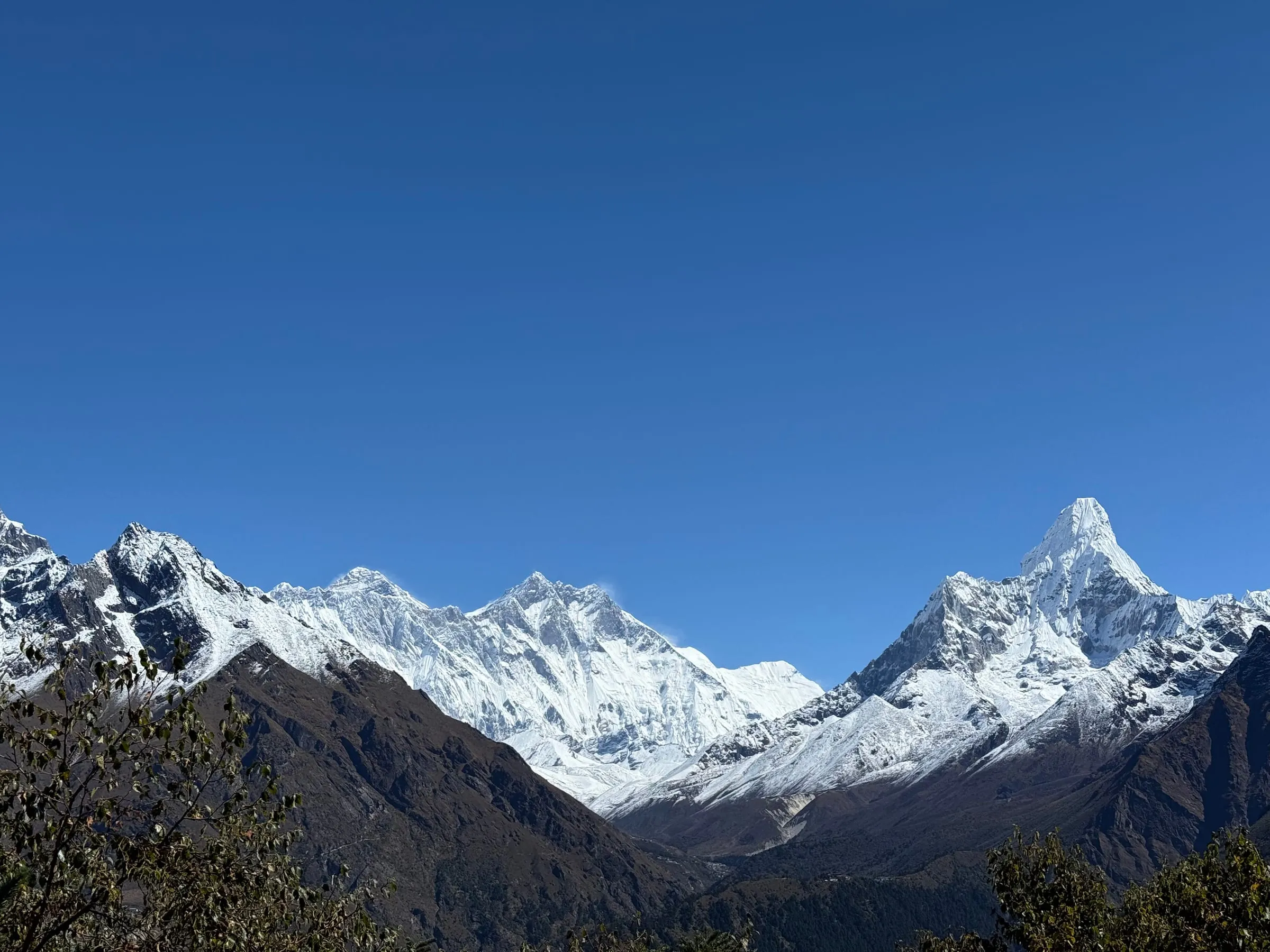
Before sunrise on 22 April 1993, six Nepali climbers left the South Col and started up towards the top of the world. Pasang Lhamu Sherpa, Sonam Tshering Sherpa, Dawa Tashi Sherpa, Lhakpa Nuru Sherpa, Pemba Nuru Sherpa and Nawang Thile Sherpa.
Two of them did not come back.
Pasang was a mother of three from Solukhumbu. She had tried Everest three times already, in 1990, 1991 and 1992, and turned around every time. That afternoon she became the first Nepali woman to stand on the summit.
She died on the descent, and because of that her story usually gets told as a tragedy. It is one. It is also not the most interesting thing about her.
Who was Pasang Lhamu Sherpa?
A Nepali mountaineer and trekking professional, born in 1961 in Solukhumbu, the mountain country that holds Lukla, Namche Bazaar and the southern approach to Everest.
She grew up next to an industry that ran on Sherpa knowledge and Sherpa labour, and in which the recognition and the leadership went almost entirely to men. She went into trekking and travel work, learned on the job, and climbed in Nepal and abroad.
By the start of the 1990s, dozens of Nepali men had summited Everest. No Nepali woman had.
Three attempts that did not end it
Histories tend to compress failed attempts into a clause before the successful climb. Three attempts is three sets of permits, three lots of funding, three teams assembled, three times going back to face the same mountain.
She was also doing it inside a society that did not particularly encourage women to build public careers at altitude. The documentary Pasang: In the Shadow of Everest puts the climb inside that larger fight: resistance from family, from foreign climbers, from government structures, from what was simply expected of women in Nepal at the time.
The fourth attempt was going to be different in one specific way. She did not want to be added to somebody else’s expedition.
The Nepalese Women’s Sagarmatha Expedition
The timing was competitive. An Indian women’s team was planning an Everest climb and had invited several Nepali women to join. Pasang expected a leadership role. It did not develop the way she wanted.
So she and her husband, Lhakpa Sonam Sherpa, helped organise a separate Nepali expedition instead.
That detail is the one worth holding onto. She was not waiting to be picked. She was building the thing that would let her go.
The climb
Shortly after midnight the six of them left the South Col and climbed into the dark on the southeast ridge. Above them: the Balcony, the South Summit, the Hillary Step, and then the narrow snow crest at the top.
They were slow. Sonam Tshering, an experienced Everest climber, was getting ill. A stretch that is usually done in something like ten hours took them more than fourteen.
At around half past two in the afternoon they reached the summit.
Everest is only half climbed at the summit, and they had spent too long getting there.
Coming down
Their pace kept dropping and Sonam Tshering got worse. Three of the team descended ahead. Pemba Nuru stayed with Pasang and Sonam Tshering near the South Summit as it got dark.
They had no bivouac equipment. Communications were limited. The oxygen ran out.
They survived the night, high up, and by morning both Pasang and Sonam Tshering were critical. Pemba Nuru went down towards the South Col to get oxygen and help. The climbers below were too exhausted to get back up quickly, and then the wind came in and stopped anyone from trying at all.
Pasang did not survive. Sonam Tshering disappeared and was never recovered.
Her body was found near the South Summit on 10 May and brought down.
Nepal got its first female Everest summiteer and lost her on the same expedition.
What the country did next
The news went a long way beyond mountaineering circles, because people understood immediately what she had represented.
She was awarded the Nepal Tara, the Star of Nepal, posthumously. Her face went on a postage stamp. A highway took her name, and so did a peak, and schools, and institutions. In 2024 the International Astronomical Union approved “Lhamu” as the name of a crater near the Moon’s south pole, with the citation recording that it honours the first Nepali woman to climb Everest.
None of which explains why she mattered. Women in Nepal could see themselves differently afterwards. That is the part that does not fit on a stamp.
The part that is harder to write
There is a way of telling this story that turns a person into a symbol so fast that she disappears into it. Pasang was not walking towards a tragedy in order to become an icon. She was chasing a professional ambition in a world that had left very little room for her to have one.
And the expedition contains hard lessons about high-altitude safety that are not softened by how much she deserved the summit. Fourteen hours instead of ten. No bivouac gear. Limited communications. Oxygen that ran out. Everest does not make allowances for what a climb means to a country. The descent is part of the climb, and every decision near the top is a decision for the whole team. That team included Sonam Tshering, who also died, and who is remembered far less often.
Both things are true at once, and the article that only holds one of them is not doing her a favour.
What opened afterwards
Not much, immediately. Guiding and mountaineering stayed male-dominated. Women kept struggling for training, employment, sponsorship, recognition.
What changed was the picture of what was possible. In the years since, Nepali women have become Everest summiteers, mountain instructors, expedition leaders, internationally certified guides. Those are their own careers, built with their own work. Pasang is in the history they inherited.
We are a women-led trekking company and our work happens a long way below the summit of Everest. The starting belief is the same one: women belong in the mountains as trained professionals and decision-makers, not only as visitors. In practice that means training, shared experience, safety standards that do not bend, and making sure the next woman does not have to start from nothing. You can meet our guides here.
Remembering her now
Most travellers meet her name before they meet her story. The road towards the Everest region is the Pasang Lhamu Highway. There are statues, schools, organisations, a peak.
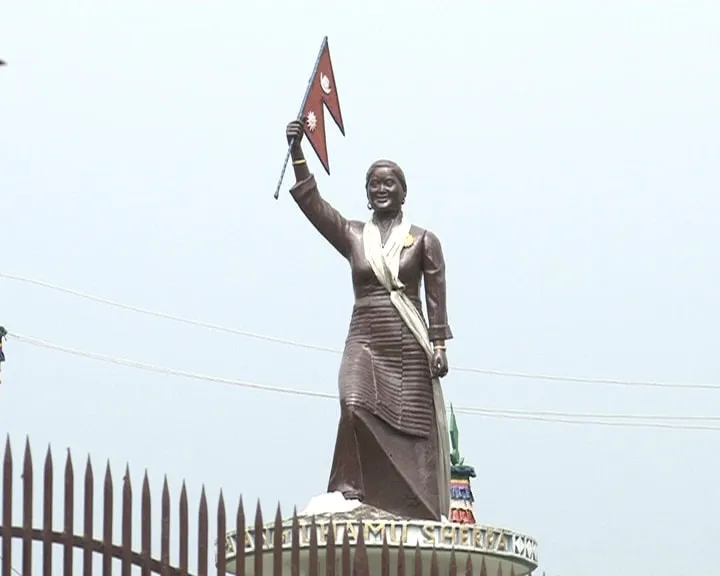
She was brave. The more useful question is whether women in Nepal’s trekking and mountaineering industries can now train, lead, earn fairly and decide about their own careers. Some can. Not all.
The Everest Base Camp Trek goes up the same valley her expedition walked in 1993, as far as the foot of the mountain.
Frequently asked questions
Who was the first Nepali woman to climb Mount Everest?
Pasang Lhamu Sherpa, on 22 April 1993.
How many times did she attempt Everest?
Three unsuccessful attempts, in 1990, 1991 and 1992. She reached the summit on her fourth, in 1993.
How did Pasang Lhamu Sherpa die?
She died during the descent after summiting. Her team was delayed high on the mountain, their oxygen ran out, and worsening weather prevented timely assistance.
Was she the first woman to climb Everest?
No. Junko Tabei of Japan was the first woman to summit Everest, in 1975. Pasang Lhamu was the first woman from Nepal.
Did she return from Everest?
She did not survive the descent. Her body was recovered near the South Summit on 10 May 1993.
Why does she matter today?
Her climb changed expectations about Nepali women in mountaineering and she is remembered as a national figure in Nepal. Later generations of Nepali women climbers and guides inherited a path she insisted on entering.
Sources
- Elizabeth Hawley, expedition record, American Alpine Journal, 1994
- Pasang: In the Shadow of Everest, official documentary
- Nepal News, commemoration feature
- USGS / IAU planetary nomenclature record for the crater Lhamu
- The Guardian, photo essay on Nepal’s female mountaineers, December 2022