
Stories
Did Bill Denz Secretly Climb Machhapuchhre?
Machhapuchhre has no verified ascent. A British team stopped 150 feet short in 1957, and a New Zealander may or may not have finished the job in 1982. Nobody can prove it either way.
Bill Denz died on Makalu on 3 October 1983, swept off the West Pillar by an avalanche. He was 31. His body was never found.
That is the reason this article exists. Somewhere in the year or two before he died, Denz may have walked into the Annapurna Sanctuary alone, without a permit, and climbed a mountain that Nepal had closed to climbers twenty-five years earlier. Or he may not have. The one person who could have settled it was gone before anyone thought to ask him properly.
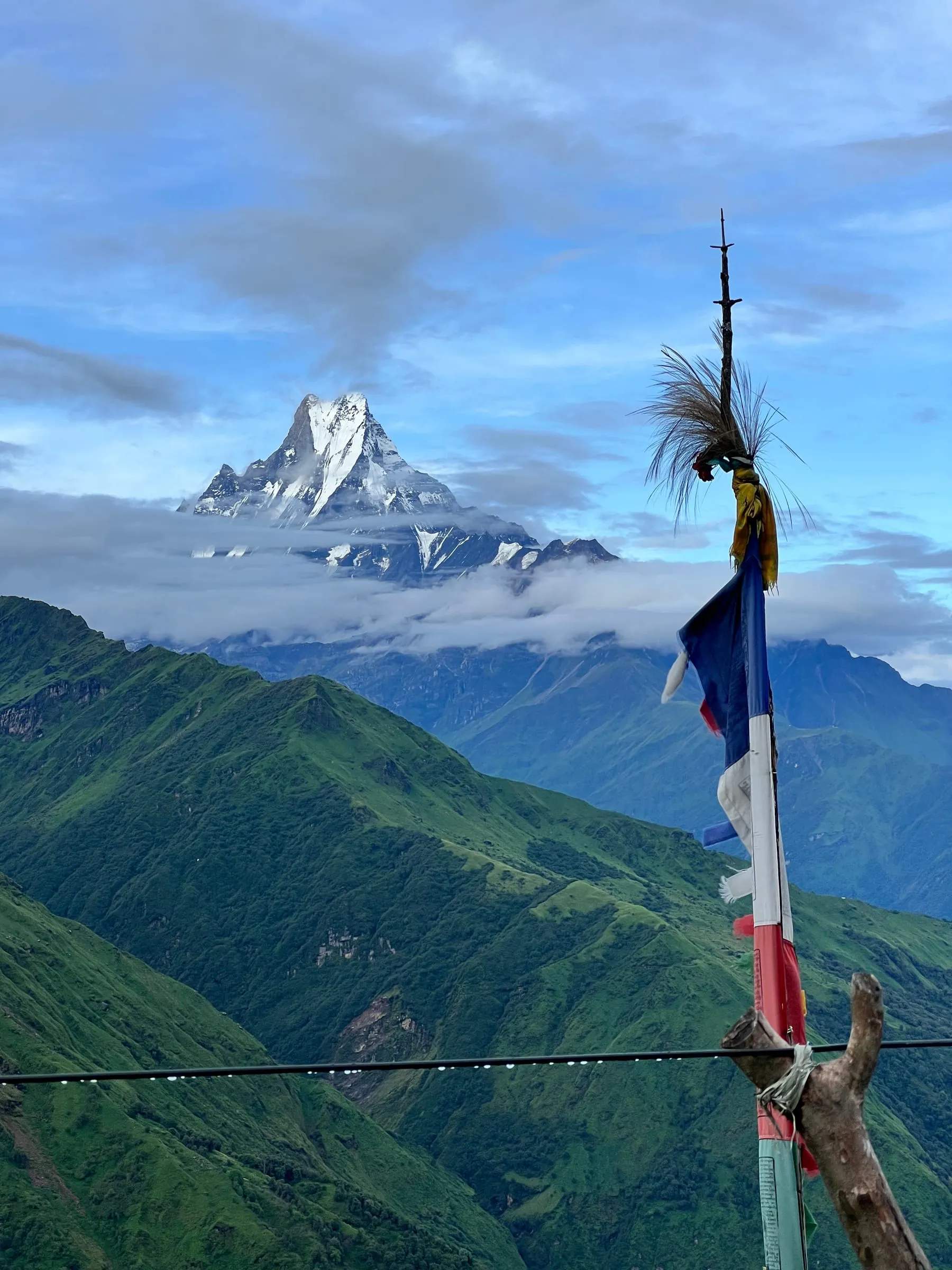
From Pokhara, Machhapuchhre rarely feels far away. On a clear morning it rises behind the hills with two sharp points cutting the sky. The Nepali name means “fish tail”, though you only really see the tail from the west; from other directions it is a single steep spire, solitary and almost impossibly clean.
There are higher mountains in the Annapurna range. Few hold your eye the same way, and that is not only about the shape.
It has never been officially climbed.
Has anyone climbed Machhapuchhre?
No. There is no verified ascent of the 6,993-metre summit.
One expedition is officially recorded, in 1957, and it stopped short. Bill Denz was later rumoured to have soloed the mountain illegally in 1982, or somewhere in the early 1980s. Accounts differ. No conclusive evidence has ever surfaced. Machhapuchhre remains officially unclimbed.
The mountain at the edge of the Sanctuary
Machhapuchhre stands about 25 kilometres north of Pokhara and forms the eastern wall of the Annapurna Sanctuary. It is lower than Annapurna I, lower than Dhaulagiri, lower than several of its neighbours. Its position does the rest: it sits out in front of the range with nothing between it and the valleys, so it looks larger than the arithmetic says it should.
For people living around Kaski, it is not a landmark you go and see. It is above the farms, the roads, the villages and the surface of Phewa Lake, most days of the year. Gurung communities on the southeastern side know it as Katasunkli, which the Nepali Times translates as “snowy fish mouth”.
It is often described as sacred. Some traditions link the Himalaya with Shiva and Parvati; local understandings vary, and not every historian or community representative explains the sacredness the same way. What is not in dispute is that the mountain carries deep cultural meaning, and that its future has been argued about inside Nepal for decades, and not only by foreign climbers.
The 1957 expedition that turned back
The documented history is short. A small British expedition, led by Lieutenant Colonel Jimmy Roberts, who had explored the Sanctuary and thought the mountain might go from the north.
The team was Wilfrid Noyce, David Cox, Charles Wylie and Roger Chorley, with Sherpa team members and local porters. Getting anywhere near the top meant steep snow, ice flutings, exposed traverses and long stretches of fixed rope.
Then things went wrong early, and not in a climbing way. Chorley fell seriously ill with what turned out to be polio and had to be carried down. Roberts went with him. That left a much smaller team to keep going.
On 2 June 1957, Noyce and Cox left the top camp before dawn and climbed through deep snow towards a final face of hard ice. By late morning it was snowing heavily. They got to just below the summit and found the last section covered in steep, polished ice.
They turned around.
Writing it up afterwards for the American Alpine Journal, Noyce said it felt as though the gods had drawn their line there. Whatever later retellings did with that sentence, the expedition’s own report is unambiguous about the cause: hard ice and worsening weather.
Nobody has confirmed a summit since.
Why is climbing Machhapuchhre banned?
Nepal stopped issuing permits after 1957 and kept the mountain formally closed in the years that followed. The closure is generally connected to preserving its cultural sanctity.
It comes up for discussion periodically. The case for reopening is that a carefully managed expedition could bring income and attention to the surrounding communities. The case against is cultural respect, fragile high-altitude environments, and a blunter question: Nepal already has hundreds of peaks open to climbing, so does every mountain have to become a summit objective?
Who was Bill Denz?
Born in Britain, raised in New Zealand, and not a climber who looked for ordinary routes.
Denz built a reputation on hard first ascents, winter climbs and solo efforts that other people would not have started. He climbed extensively around Aoraki Mount Cook and in the Darran Mountains before taking that approach to Yosemite, Patagonia, Alaska and the Himalaya. In 1981 he made the first ascent and traverse of Kusum Kanguru in Nepal, alone. He made two attempts on Menlungtse while it was still unclimbed.
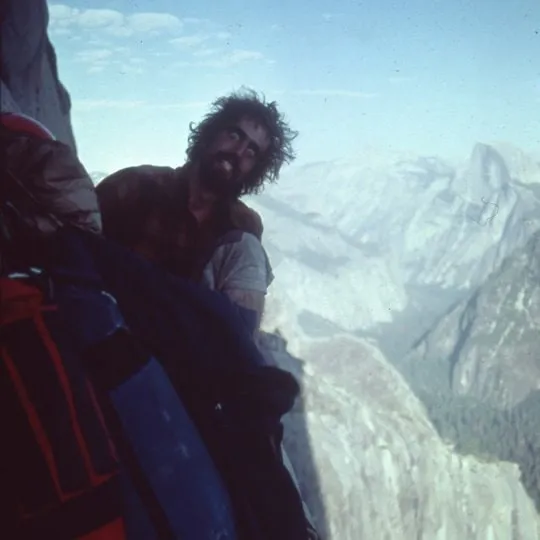
The New Zealand Alpine Club remembers him as an iconoclast who helped transform hard alpinism in New Zealand.
Which is the whole problem with the Machhapuchhre story. It is exactly the kind of thing he might have done, and that is not evidence.
The alleged ascent
The version most often told puts Denz on the mountain in 1982, though some accounts say only “the early 1980s” and others disagree about the year outright.
He approached quietly, the story goes, and climbed alone without a permit. He told few people, or nobody, because saying he had done it would also mean saying he had entered a closed and culturally significant mountain illegally.
That is where it stops.
There is no publicly verified summit photograph. No accepted expedition report, no GPS record, no independent witness, no route description detailed enough to check. The absence of proof does not mean he failed. It also does not mean he succeeded.
The honest version is the dull one: Bill Denz may have climbed Machhapuchhre. Nobody has been able to show that he did.
Why it was never resolved
Because of Makalu, and because of how quickly a story moves away from its source once the source is dead.
Denz was on the West Pillar with Peter Hillary and others when the avalanche took him. After that there was no interview that could pin down a date, a route, or a reason for the secrecy. Every retelling since has been a retelling of a retelling.
It sits now somewhere between climbing history and mountain folklore, and it is not obvious that it will ever move.
Does it matter whether he got to the top?
For the record books, enormously. A verified ascent would rewrite the official history of one of the most recognisable mountains in Nepal.
For everything else, less obviously. Mountaineering usually celebrates whoever stood on top first. Machhapuchhre is the rare case where the interesting decision was made by a country and its communities rather than by a climber, and where the highest point has stayed beyond public proof.
Can you trek near Machhapuchhre?
Yes. The summit is closed; the mountain is not.
The Annapurna Base Camp Trek passes through Machhapuchhre Base Camp on the way into the Sanctuary. The Mardi Himal Trek follows a ridge with close views of the steep southern face. You can also see it from Ghandruk, from Chhomrong, and from most of the viewpoints around Pokhara.
Walk any of them and you get something an expedition does not: the mountain looks like a different mountain from each valley, and you find out how many people live underneath it.
Frequently asked questions
Has Machhapuchhre ever been climbed?
No ascent has been officially verified. The 1957 British expedition stopped just below the summit. Bill Denz was later rumoured to have climbed it illegally, but no conclusive evidence has been found.
Why is Machhapuchhre called Fishtail Mountain?
From the west, the two summit points look like the open tail of a fish. That profile gave the mountain its Nepali name and its English nickname.
Why is climbing Machhapuchhre prohibited?
Nepal does not issue climbing permits for Machhapuchhre. The closure is generally associated with respect for its cultural and spiritual importance, along with concerns about the surrounding environment.
How close did the 1957 expedition get?
Wilfrid Noyce and David Cox reported reaching roughly 100 to 150 feet below the summit before turning back on steep ice in deteriorating weather.
Did Bill Denz die on Manaslu?
No. Denz was killed by an avalanche on the West Pillar of Makalu on 3 October 1983.
Can trekkers visit Machhapuchhre Base Camp?
Yes. Machhapuchhre Base Camp is a recognised stop on the Annapurna Base Camp Trek. Visiting it does not involve climbing the closed summit.
Sources
- Wilfrid Noyce, expedition account, American Alpine Journal, 1958
- Review of Climbing the Fish’s Tail, American Alpine Club
- Nepali Times, on the climbing ban and the Denz story
- New Zealand Alpine Club, biography of Bill Denz
- ExplorersWeb, overview of the alleged ascent