
Nepal is one of the most welcoming places in the world for a woman to travel alone — and yet it’s also the country that, in 2023, made a licensed guide mandatory for every foreign trekker. That rule wasn’t written to make solo travel harder. It came after a run of incidents where trekkers went missing, fell ill at altitude, or made dangerous calls with nobody nearby to help. As a women-led, Nepal-based company, we think that rule — and the way you travel around it — is the real story of staying safe here.
This guide comes straight from our team: guides who have led these trails since they were teenagers, and a founder who started this company so more women could see the Himalaya on their own terms. We’re not repeating generic travel-blog advice. We’re telling you what actually happens on the trail.

Is Nepal Safe for Solo Female Trekkers? The Honest Answer
Short version: yes, and thousands of women do it every year. The teahouse culture on Nepal’s main trails is communal and warm — you eat in a shared dining room, sleep in a row of twin rooms, and the same lodge owners see you night after night. On popular routes like Everest, Annapurna and Langtang, locals have welcomed independent women travellers for decades.
The honest caveat is that “safe to travel” and “safe to trek completely alone” are two different things. The 2023 rule means you now trek with a registered guide from a licensed agency. In our experience that’s a net win for women: you always have someone local who knows the trail, the language, and the clinics, and you remove the one scenario — being alone and unwell at altitude — that caused most of the original incidents.
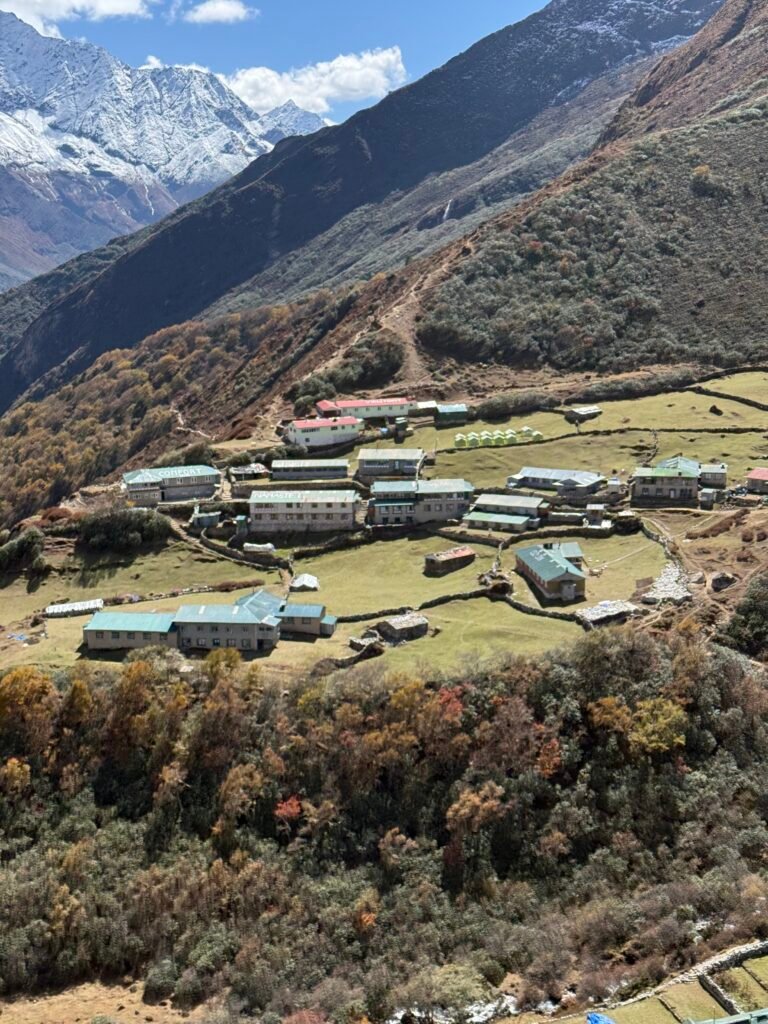
Since 2023: You Trek With a Licensed Guide
From 2023, Nepal requires every foreign trekker to be accompanied by a registered guide from a licensed trekking agency. This applies across the national-park and restricted areas alike. What this means practically:
- You won’t be issued permits to trek solo in the controlled regions without a guide.
- Your agency handles the paperwork — national park permits, restricted-area permits, and TIMS as applicable.
- The guide is your safety net for altitude, weather, and anything that goes sideways on the trail.
We see this as the single biggest safety upgrade for women in years. It doesn’t take away independence — you still set the pace, choose your side-trips, and shape the trip. It just means you’re never the only person responsible for a bad decision at 4,000 metres.
The Routes We Recommend for Women Trekking Nepal
Not every trail suits a first solo-style trip. These are the ones our female guides return to most — well-marked, well-fed, and genuinely social:
Everest Base Camp (12 Days)
The classic. Teahouses the whole way, a strong acclimatization rhythm through Namche and Dingboche, and the kind of trail community that makes solo travel feel anything but lonely. See our Everest Base Camp trek →
Annapurna Base Camp (8 Days)
Our most beginner-friendly big-mountain trek — teahouses throughout, a hot-spring recovery at Jhinu, and a jeep-road bail-out if you ever need it. See our Annapurna Base Camp trek →
Langtang Valley (7–8 Days)
Closer to Kathmandu, deeply Tamang and Tibetan-influenced, and short enough to feel low-commitment while still giving you real Himalaya. See our Langtang Valley trek →
Manaslu Circuit (12 Days)
Quieter and more remote, with a Tibetan-border feel and the Larkya La pass. Restricted-area permit + guide required — which is exactly why it stays special. See our Manaslu Circuit trek →
Real Local Insight: Tea-House Etiquette Nobody Tells You
This is the stuff typical blogs skip. On the trail, small cultural moves change how you’re treated:
- Step past someone with your right shoulder forward when passing a mani wall, stupa, or prayer wheel. Walk clockwise — it’s the respectful direction and locals notice.
- Don’t point your feet at the hearth. The stone fireplace (the chulo) is the heart of the dining room; tuck your legs aside when you sit near it.
- Accept the salt-tea or butter-tea at least once. Refusing the first cup can read as cold; you can leave it after a sip. It’s how trust gets built with lodge families.
- Dress for the villages, not the summit photos. Shoulders and knees covered in the lower villages goes a long way — and it’s practical at teahouse temperature too.
- The dining-room bench is the real social hub. That’s where you meet other trekkers and the guides trade weather reports. Sit long, order the ginger-lemon, and listen.
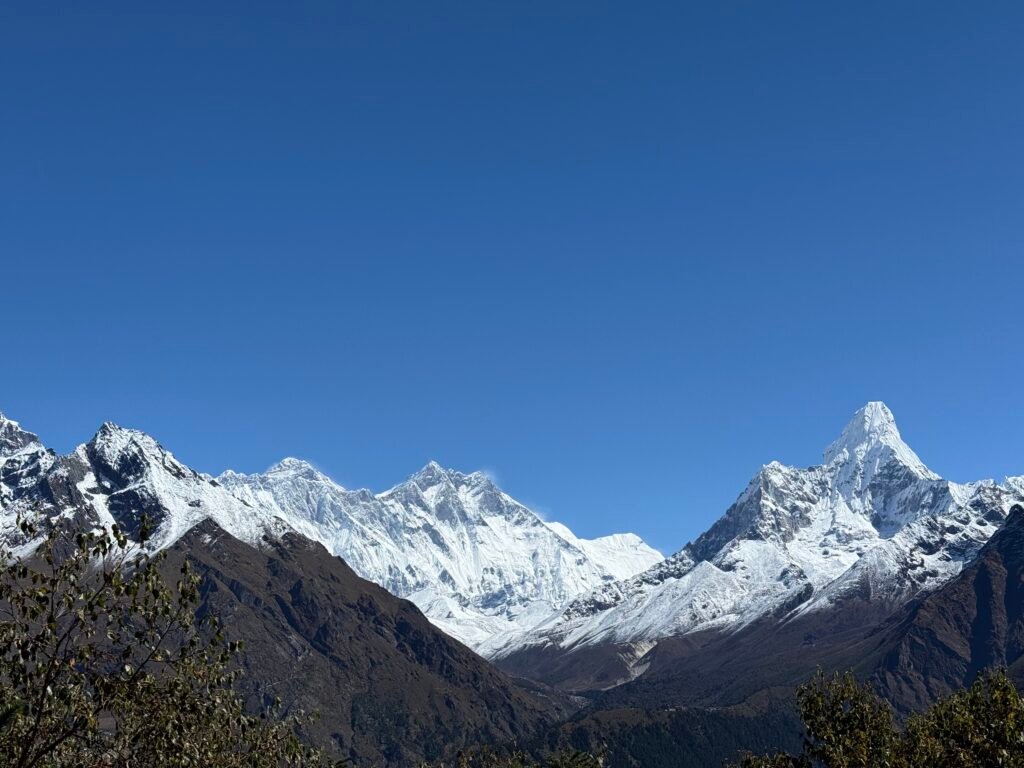
The Practical Stuff — Permits, Season, Safety
| Guide rule | Mandatory licensed guide for foreign trekkers since 2023. We supply a registered guide from our licensed agency and handle all permits. |
| Best season | Mid-March–May and October–November: clear skies, stable trails, best chance of clean mountain views. December–February is colder and quieter; June–September brings monsoon cloud and leeches at lower elevations. |
| Permits | National-park entry (e.g. Sagarmatha, Annapurna) plus TIMS, and restricted-area permits (Manaslu, Tsum, Upper Mustang) where required. Arranged by us before you fly in. |
| Accommodation | Owner-run teahouses: twin rooms, shared toilets, and a heated dining room where dal bhat keeps coming. Simple but warm and social. |
| Food on the trail | Dal bhat (unlimited refills), momos, noodles, pancakes, apple pie in bigger villages. Eat carbs, drink 3+ litres, sleep — that’s the altitude playbook. |
| Safety | Guides carry a pulse oximeter and know the early signs of altitude sickness. We build acclimatization days in and descend immediately if symptoms worsen. You are never alone to make that call. |
Why a Women-Led Company Changes the Experience
There’s a difference between a company that allows women to guide and one built by women guides. Our founder started 8 Mountains so more women could lead — and our clients tell us the difference shows up in small ways: a guide who notices when you’ve gone quiet at altitude, a pace set for the group rather than the schedule, and a tone on the trail that feels like a strong friend showing you her backyard.
If you’d like to meet the team before you book, see the women who lead our treks →. Every one of them has walked these routes more times than she can count.
Common Mistakes Women Make on Their First Nepal Trek
- Rushing the acclimatization days. Namche and Dingboche aren’t “rest” days to skip — they’re the reason you reach the top. Stay, walk high/sleep low, hydrate.
- Under-dressing for teahouse nights. The dining room is warm; the bedroom is not. A real sleeping bag and a beanie for sleep are non-negotiable.
- Skipping travel insurance. Make sure yours covers trekking to your maximum altitude and helicopter evacuation. We ask for this before any trek.
- Not telling the guide how you feel. The single most dangerous habit is quietly pushing through a headache. Say it out loud — that’s what the guide is there for.
Internal Links If You’re Planning
- Compare routes: Everest Base Camp · Annapurna Base Camp · Manaslu Circuit · Langtang Valley
- Meet the team: Our women guides
- Who we are: About 8 Mountains
- Talk to a human: Contact our team
Real Questions We Get Asked
Is Nepal safe for solo female travelers?
Yes. Nepal is one of the more welcoming countries in Asia for women travelling alone, and the main trekking trails have a warm, communal teahouse culture. Since 2023 a licensed guide is mandatory for foreign trekkers, which most women we talk to see as a safety upgrade rather than a restriction.
Do I need a guide to trek in Nepal now?
Yes — for foreign trekkers, a registered guide from a licensed agency has been required since 2023. Your agency handles permits and the guide becomes your on-trail safety contact for altitude, weather, and emergencies.
Can I still travel independently if I have a guide?
Absolutely. You set the daily pace, choose side-trips, and shape the experience. The guide handles logistics, permits, and safety — not your itinerary decisions.
Which trek is best for a first-timer?
Annapurna Base Camp (8 days) is our most beginner-friendly big-mountain trek: teahouses throughout, a hot-spring stop at Jhinu, and a jeep-road option if you need to cut it short. Everest Base Camp is the classic next step.
What should I pack as a woman trekking Nepal?
The same core kit as any trekker — layers, a real sleeping bag, broken-in boots, sunscreen, purification, and personal medicines (bring enough for the full trek plus extra days). Add a few practical extras: menstrual-care products (available in Kathmandu but not always en route), quick-dry travel towel, and modest village-wear for lower settlements.
What about altitude sickness?
It’s the main real risk. We build acclimatization days in, carry a pulse oximeter, and descend immediately if anyone shows genuine AMS symptoms. The rule on our treks: say how you feel out loud, early.
Is it respectful to dress a certain way?
Cover shoulders and knees in villages and monasteries — it’s both culturally appropriate and practical in teahouse temperatures. On the open trail, dress for the conditions; in the villages, dress for the culture.
Why choose a women-led trekking company?
Because the people who planned the route and lead it have walked it as women. Clients tell us the pace, the attention to how they’re feeling, and the overall tone feel different — more like a strong friend showing you her home ground.
Thinking about your first Nepal trek?
Small groups, local women-led guides, and itineraries built from years on the ground. Message Vivi and we’ll plan it with you — no pressure, just straight answers from people who walk these trails every week.

Author: Vivi
\n\n