
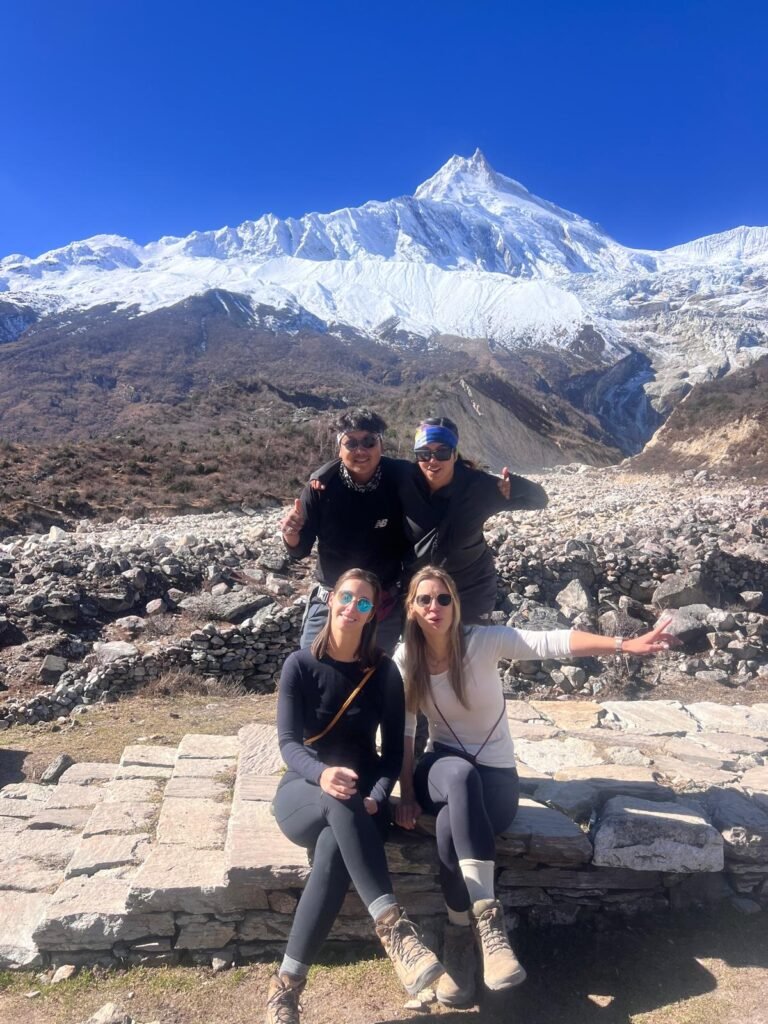
Manaslu & Tsum Valley Trek: Sacred Valleys of the North
Trekking GuidesCommunity ProjectsSustainability
Take the Manaslu Circuit and add the Tsum Valley — a hidden Buddhist enclave of monasteries and villages where time slowed down centuries ago.
At 8 Mountains, this trek — like every trek we run — is led by our fluent-English, first-aid-trained local guides, many of them women leading the way in Himalayan guiding. You get safety-first leadership, genuine cultural connection, and the knowledge that a portion of your trek supports community projects back in Nepal.
Community ProjectsSustainability
Manaslu & Tsum Valley Trek — At a Glance
| Duration | 18 days |
|---|---|
| Max Elevation | 5,160 m (Larkya La) |
| Difficulty | Challenging |
| Best Seasons | Mar–May & Oct–Nov |
| Permits | Restricted: MCAP + ACAP + TIMS |
Day-by-Day Itinerary
Day 1–4 — Kathmandu → Soti Khola → Jagat → Deng
Enter the restricted zone.
Day 5–7 — Deng → Namrung → Lho → Sama Gaun
Manaslu views, monasteries.
Day 8–10 — Sama → Samdo → acclimatize → Larkya Phedi
Rest before the pass.
Day 11 — Larkya La (5,160 m) → Bimthang
The big crossing.
Day 12–13 — Bimthang → Tilje → Dharapani → Tsum turn-off
Begin the Tsum arm.
Day 14–16 — Tsum Valley: Chhule → Mu Gompa (3,700 m) → Rachen Gompa
Sacred heart.
Day 17–18 — Tsum → Kathmandu
Drive out, full circle.
Best Time to Go
- Spring (March–May): Rhododendrons bloom, warmer days, clear mornings.
- Autumn (October–November): Most stable weather, best visibility, festival season.
Food, Lodges & the Human Side
You’ll stay in family-run teahouses and homestays — warm, simple, full of character. Meals are hearty: dal bhat, momos, noodles, and (in some valleys) fresh yak cheese. Our guides help you eat safely and stay hydrated at altitude, and introduce you to the local families whose homes you share.
Fun & Fascinating Facts
- What makes Manaslu a “spiritual mountain”? Locals believe that the mountain is home to powerful deities and spirits. The name “Manaslu” comes from the Sanskrit word “Manasa,” meaning “soul” or “spirit.” This spiritual significance is deeply rooted in both Hindu and Buddhist traditions.
- What wildlife can I spot along the trek? The Manaslu Conservation Area is home to rare and endangered species, including snow leopards, red pandas, and blue sheep. Over 110 bird species, 33 mammals, and 11 butterfly species have been recorded.
- What is the highest point on the trek? Larkya La Pass, standing at 5,106 meters (16,752 feet), is the highest point of the trek and offers breathtaking panoramic views of surrounding peaks.
- What cultural influences will I experience? The trek passes through villages inhabited by Gurung, Nubri, and Tibetan communities. You’ll encounter Tibetan Buddhism, with monasteries, prayer flags, and chortens dotting the landscape.
- How does the trek support local communities? By hiring guides, porters, or staying in local teahouses, trekkers contribute directly to the livelihoods of the communities along the route. These interactions promote sustainable tourism and cultural exchange. Elevation: 760m → 1,400m (Kathmandu) / 820m (Pokhara) Driving Time: 6–7 hrs (Kathmandu) / 5–6 hrs (Pokhara) Drive from Besisahar to your chosen destination. You may con
Frequently Asked Questions
How long is the trek?
Most plans run 18 days. We can shorten or extend based on your fitness and time.
How hard is it?
Graded Challenging in our facts table above. Cardio + hill walks 6–8 weeks before helps a lot.
Do I need permits?
Yes — and 8 Mountains handles every permit for you (no paperwork stress).
What is the best time?
Spring (Mar–May) and Autumn (Oct–Nov) are the sweet spots.
How much does it cost?
Depends on group size, season, and services. Message us on WhatsApp for a tailored quote — and remember a portion funds community projects.
Can I trek solo?
Solo trekking is possible on non-restricted routes; restricted areas (Manaslu, Nar Phu, Tsum) require a licensed guide by law.
What should I pack?
Layers: wicking base, insulating mid, down jacket, waterproof shell, broken-in boots, hat/gloves, sleeping bag, headlamp, purification, sunscreen.
Is it safe?
Yes, with the right acclimatization and a trained guide. 8 Mountains guides are first-aid certified, carry oximeters, and build rest days into every high-altitude plan.
Why Trek With 8 Mountains?
- Female-led, locally operated: fluent-English, first-aid-trained guides who know these trails intimately.
- Safety first: acclimatization built in, oximeters, emergency protocols.
- Ethical & community-driven: your trek funds real impact — health camps, cleanups, education.
- Small groups, real connection: no cattle-herding.
Or contact 8 Mountains to start. Permits, logistics, and a lifetime of memories — handled.
Related Treks
Or contact 8 Mountains — permits, logistics, and a lifetime of memories, handled.