
Ask any trekker to name their first Nepal memory, and chances are it’s Poon Hill. Five days, rhododendron forests, Gurung villages, and a sunrise over the Annapurna and Dhaulagiri ranges that genuinely stops conversation. It’s the perfect first trek — or the perfect “I only have a week” trek.
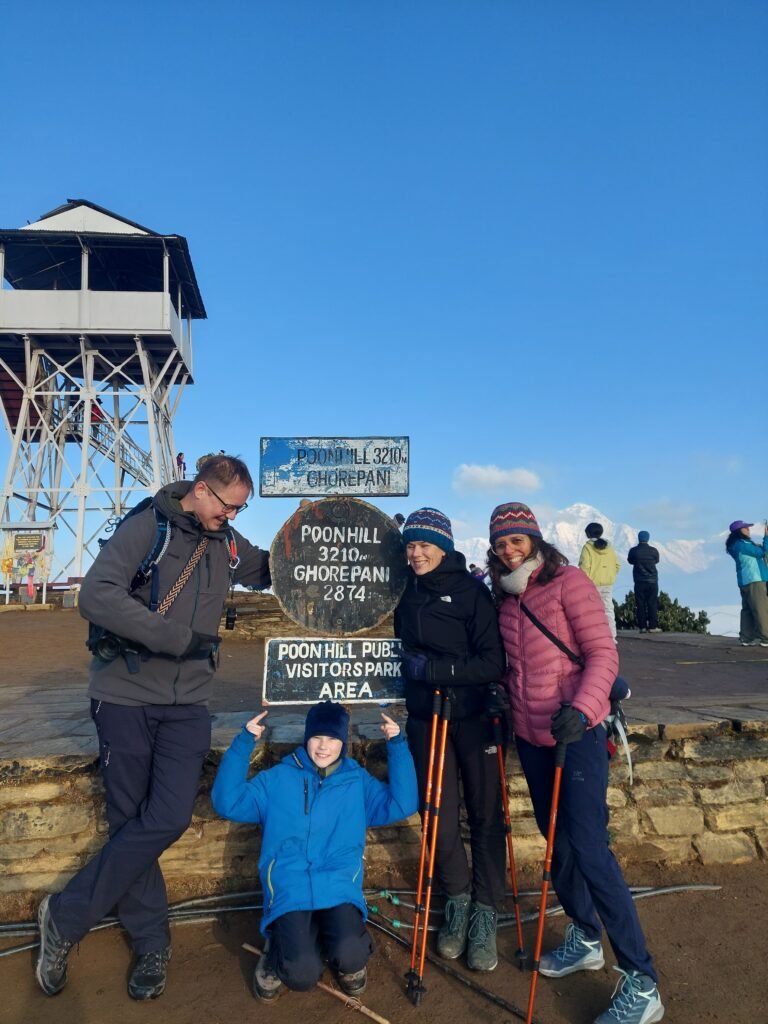
I’ve led this trek for families, solo travellers, and couples who’ve never been to Nepal before. Every time, the same thing happens: the 4am wake-up, the torchlit climb up the stone steps, and then — silence. The sun crests the horizon and suddenly Dhaulagiri turns gold, then orange, then pink, and the whole Annapurna range lights up like a row of candles. Nobody speaks. Nobody needs to.
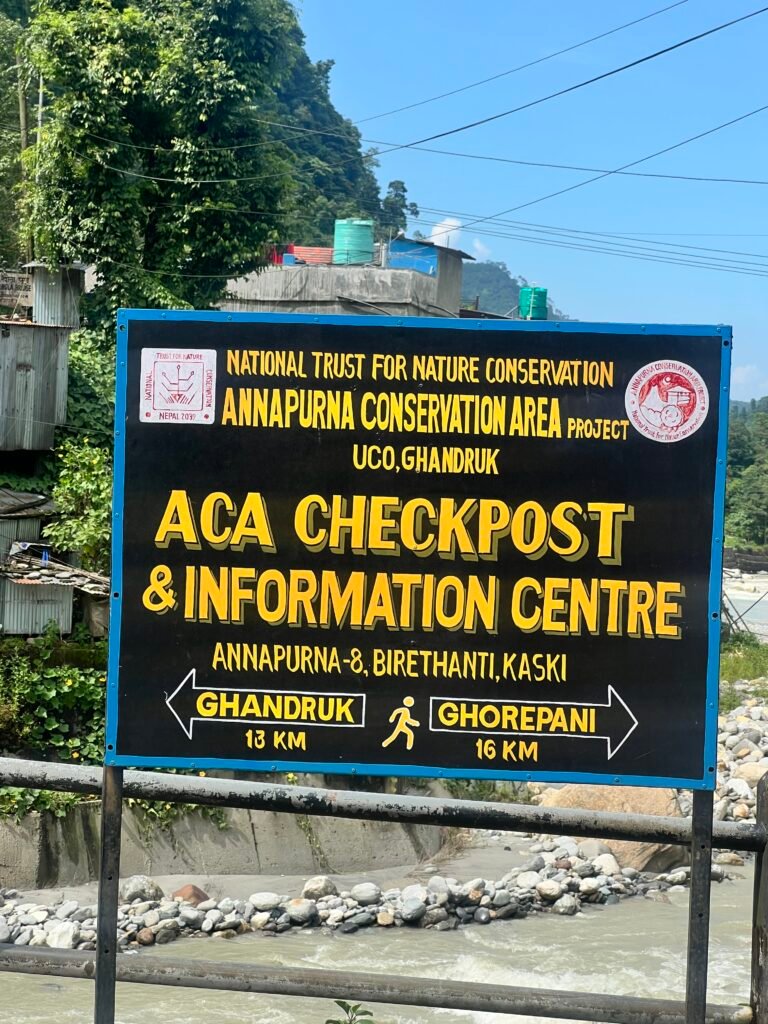
Quick Facts
| Duration | 4 days (can be extended to 5–6) |
| Max Altitude | 3,210m / 10,530ft (Poon Hill viewpoint) |
| Difficulty | Easy — low altitude, teahouse-based, family-friendly |
| Best Season | March–May (rhododendrons) and October–November (clearest peaks) |
| Starting Point | Pokhara (drive to Tikhedhunga) |
| Accommodation | Comfortable teahouses throughout |
Why Poon Hill?
The Poon Hill trek is the most popular short trek in Nepal for good reason. It’s accessible, affordable, and delivers one of the best mountain panoramas in the world — all in under a week. The 360-degree sunrise view from Poon Hill takes in Dhaulagiri (8,167m), Annapurna I (8,091m), Machhapuchhre, and a wall of lesser peaks that stretch as far as you can see.
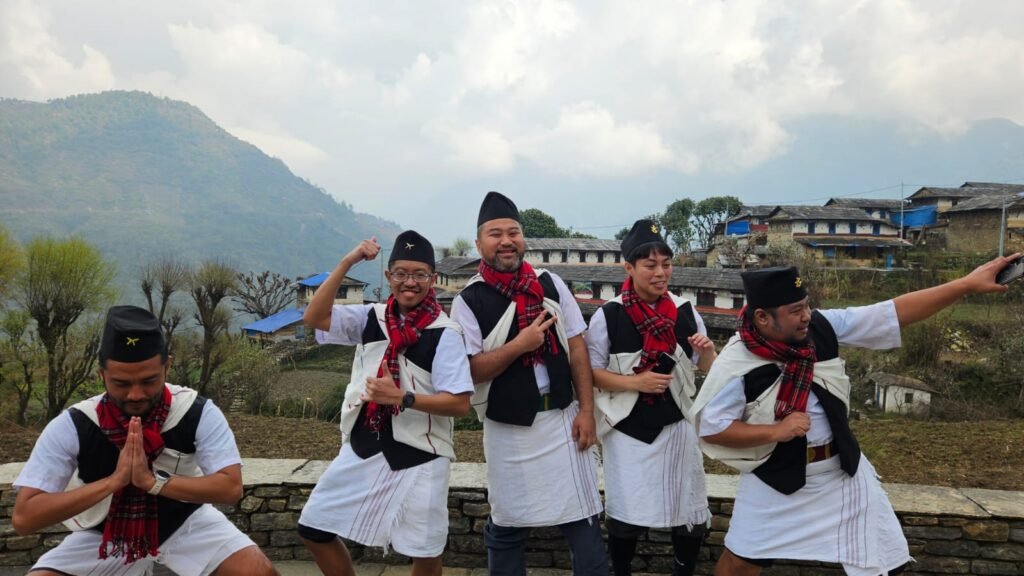
It’s also the perfect introduction to Nepal trekking. The altitude is low enough that altitude sickness is rarely an issue. The teahouses are comfortable and welcoming. The trail passes through beautiful Gurung villages where you can experience local culture without the crowds of the longer treks.
The Day-by-Day Itinerary
| Day | Route |
|---|---|
| Day 1 | Pokhara → Drive to Tikhedhunga → Trek to Ulleri |
| Day 2 | Ulleri → Trek to Ghorepani |
| Day 3 | Ghorepani → Poon Hill sunrise → Trek to Ghandruk |
| Day 4 | Ghandruk → Drive to Pokhara |
Before You Go
Best Season
March–May (spring) for rhododendrons in full bloom, and October–November (autumn) for the clearest mountain views. Year-round doable, but these are the standouts. Winter can be cold at the viewpoint but the trail is quiet.
Difficulty & Fitness
Easy. The maximum altitude is just 3,210m, and the trek is entirely teahouse-based. The biggest challenge is the famous stone-step climb from Tikhedhunga to Ulleri (about 3,200 steps). Take it slow and it’s fine for most ages. We’ve had clients from 8 to 75 years old complete this trek.
Permits
You’ll need an Annapurna Conservation Area Permit (ACAP). A guide is recommended — the trail is well-marked, but a guide brings the villages to life with stories and local knowledge you won’t get from a map.
Accommodation & Food
Comfortable teahouses in Tikhedhunga, Ulleri, Ghorepani, and Ghandruk — the most developed accommodation on the Annapurna circuit. You’ll eat dal bhat, momos, pancakes, and Ghandruk’s famous honey from the local bee-keeping centre. The apple pie in Ghorepani is a highlight.
Can I Add This to a Longer Trip?
Yes — many of our clients pair Poon Hill with the Annapurna Base Camp trek or a few days on the Annapurna Circuit. It works as a warm-up trek or a relaxing finish. Just ask and we’ll stitch it together into a custom itinerary.
Grab the Full Itinerary (PDF)
Download the complete day-by-day with distances, overnight stops, and packing recommendations, free:
Free download · the exact route we run on the ground
What to Pack
We’ve sent hundreds of trekkers out with this list. It covers the essentials for any of our teahouse treks — adjust for season and altitude.
Clothing
- Base Layer: 2–3 quick-dry t-shirts, 1 thermal set
- Mid Layer: Fleece or down jacket
- Outer Layer: Waterproof jacket & trousers, raincoat or poncho
- Lower Body: 2–3 trekking pants, thermal leggings, 2–3 pairs trekking socks
- Footwear: Trekking boots (broken in), sandals for evenings
Headgear & Gloves
- Warm beanie or sun hat
- Sunglasses, buff/scarf
- Gloves
Backpack & Gear
- 30–40L backpack
- Trekking poles — provided by 8 Mountains
Essentials
- 1L water bottles + purification tablets or filter
- Sunscreen (SPF 50+), lip balm
- Personal medicine
- Toiletries (toothbrush, wet wipes, quick-dry towel)
- Power bank
- Snacks (energy bars, nuts, dried fruits)
Frequently Asked Questions
Is Poon Hill okay for kids or older trekkers?
Absolutely. Low altitude, teahouse-based, and the trail is well-maintained. The biggest challenge is the stone-step climb — take it slow and it’s fine for most ages. We’ve had families with young children and trekkers in their 70s complete this route.
Why is Poon Hill so famous?
The 360-degree sunrise panorama — Dhaulagiri, Annapurna I, Machhapuchhre, and a wall of peaks light up at once. It’s the most photographed dawn in Nepal for a reason.
Can I add this to a longer trip?
Yes — many clients pair it with ABC or a few Annapurna days. Just ask and we’ll stitch it together into a custom itinerary that fits your schedule.
How early do I need to start for the sunrise?
You’ll need to leave Ghorepani by 4:30–5am. The climb to Poon Hill takes about 45 minutes to an hour with a torch. The tea shop at the top opens early and serves hot drinks while you wait for the sun.
Ready to walk this trail?
Small groups, local women-led guides, and itineraries built from years on the ground. Message Vivi and we’ll plan it with you.

Author: Vivi
Co-founder and lead guide at 8 Mountains. Poon Hill was the first trek I ever led, and it’s still the one I recommend to first-timers. The sunrise never gets old.