
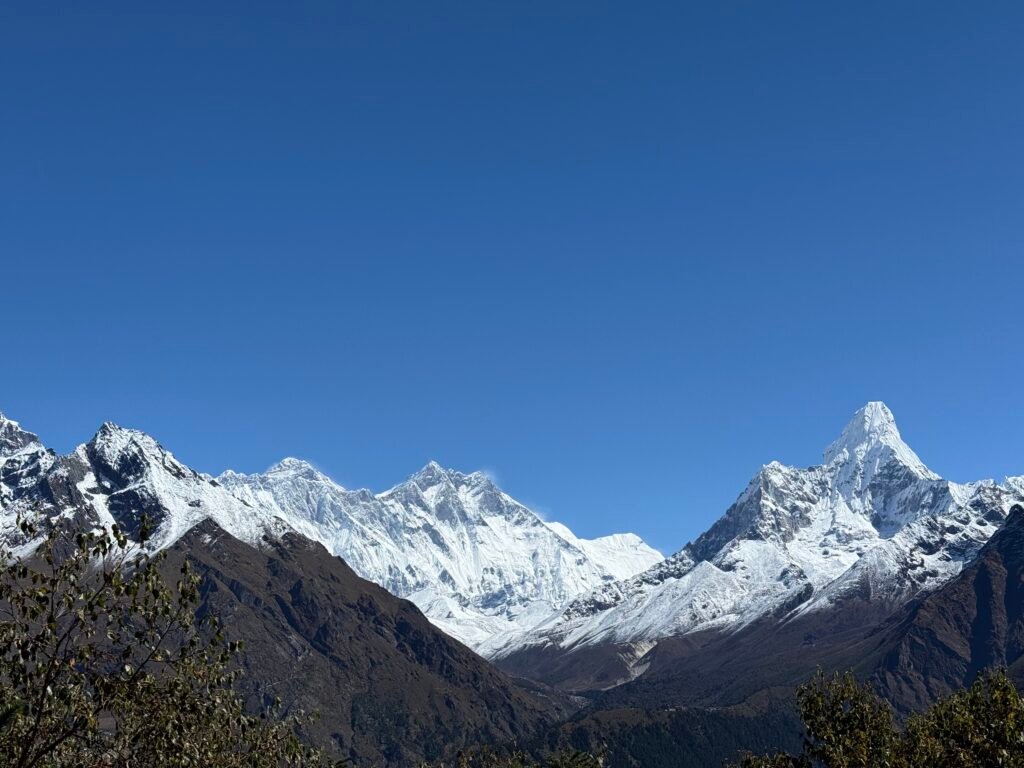
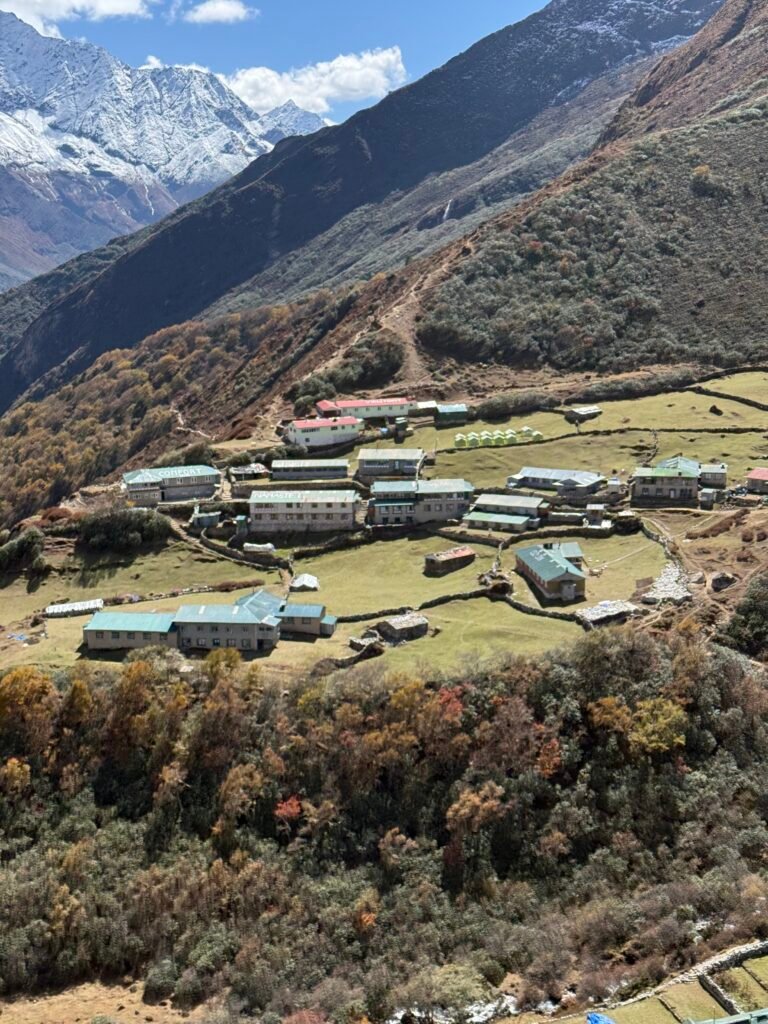
The Day-by-Day — Exactly How the Trail Feels
Below is the real schedule we use, straight from our field itinerary. Day-by-day routes, exactly as we run them on the ground:
| Day | Route |
|---|---|
| Day 1 | Kathmandu →Lukla →Phakding |
| Day 2 | Phakding→Namche Bazaar |
| Day 3 | Acclimatization in Namche Bazaar |
| Day 4 | Namche Bazaar→Tengboche |
| Day 5 | Tengboche→Dingboche |
| Day 6 | Acclimatization in Dingboche |
| Day 7 | Dingboche→Chhukung |
| Day 8 | Chhukung→Kongma La Pass →Lobuche |
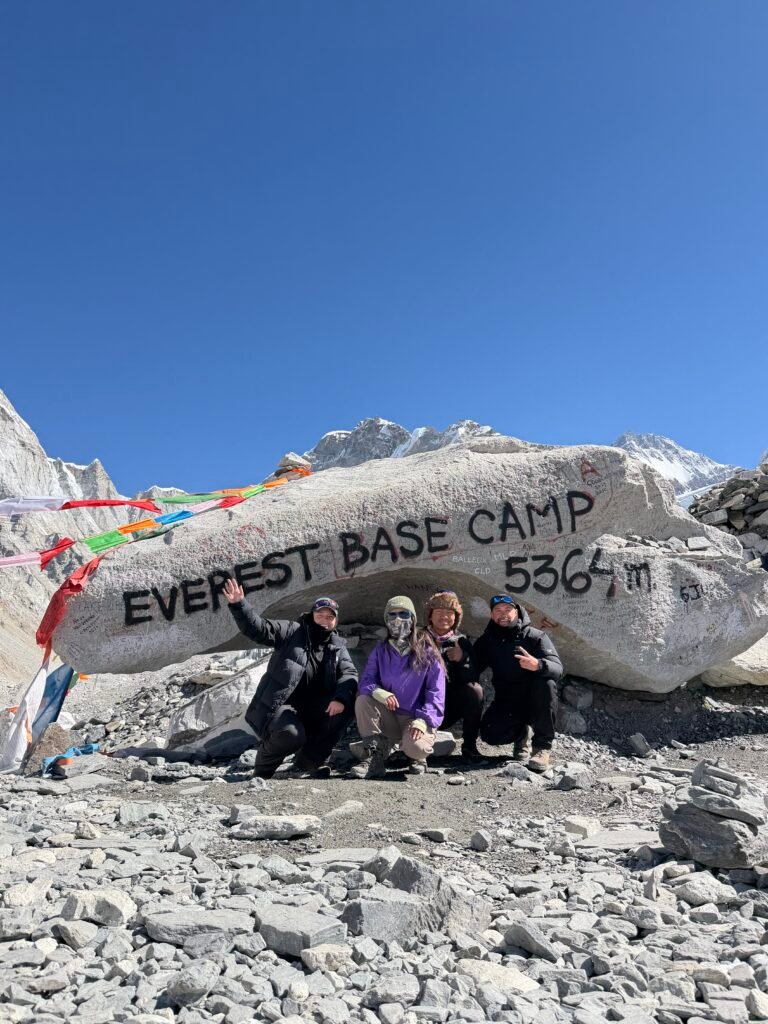
| Day 9 | Lobuche→Gorak Shep →Everest Base Camp |
| Day 10 | Gorak Shep→Kala Patthar →Dzongla |
| Day 11 | Dzongla→Cho La Pass →Thagnak |
| Day 12 | Thagnak→Gokyo |
| Day 13 | Acclimatization & Exploration–Gokyo |
| Day 14 | Gokyo→Renjo La Pass →Lungden |
| Day 15 | Lungden→Thame |
| Day 16 | Thame→Namche Bazaar |
| Day 17 | Namche Bazaar→Lukla |
| Day 18 | Lukla→Kathmandu |
Before You Lace Up: The Practical Stuff
| Best season | Strictly the stable windows: late March–May and mid-October–November. Snow on the passes outside these is a real problem. |
| Difficulty | Hard. Each pass is 5,000m+, with long 8–9 hour summit days. You should be comfortable at altitude and on multi-day treks before attempting all three. |
| Permits | Same as EBC (Khumbu Pasang Lhamu + Sagarmatha NP), guide mandatory. We add buffer days because weather can lock a pass for days. |
| Accommodation | Teahouses, with a couple of colder, simpler lodges at the pass approaches (Dzongla, Thagnak, Lungden). |
| Food on the trail | Same teahouse menu as EBC — dal bhat is your friend at altitude. We carry extra snacks for the big pass days. |
| Safety | We only run it in stable seasons with experienced guides and a flexible buffer. Each pass has a ‘turn-around’ altitude and time; if weather closes in, we reroute via the standard EBC trail. |
Life on the Trail
We keep groups small and our own guides lead every trek — no outsourced groups. You’ll walk at your own pace, eat well, and actually get to know the places you pass through. That’s the difference between a tick-list trek and one you’ll remember.
Grab the Full Itinerary (PDF)
Want the complete day-by-day exactly as we send it to clients — with every distance, overnight stop and what to pack for each section? Grab our prepared itinerary for this route, free:
Free download · the exact route we run on the ground
What to Pack — The 8 Mountains Packing List
We’ve sent hundreds of trekkers out with this list. It covers the essentials for any of our teahouse treks — adjust for season and altitude.
Clothing
- Base Layer: 2–3 quick-dry t-shirts, 1 thermal wear
- Mid Layer: Fleece or down jacket (optional)
- Outer Layer: Waterproof jacket & trousers, raincoat or plastic poncho
- Lower Body: 2–3 trekking pants, thermal leggings, 2–3 pairs trekking socks
- Footwear: Trekking boots, sandals (can be rented)
- Crampons — provided by 8 Mountains
Headgear & Gloves
- Warm beanie or sun hat/cap
- Sunglasses, buff/scarf
- Gloves
Backpack & Gear
- 40–55L backpack
- Trekking poles — provided by 8 Mountains
Essentials & Accessories
- 1L water bottles + purification tablets or filters
- Sunscreen (SPF 50+), lip balm
- Personal medicines (very important — bring enough for the full trek + a few extra days)
- Toiletries (toothbrush, wet wipes, menstrual care products, quick-dry towel)
- Power bank
- Snacks (energy bars, nuts, dried fruits)
Real Questions We Get Asked
Is the Three Passes trek dangerous?
It’s committing. Each pass is 5,000m+ and weather can trap you for days. We run it only in stable seasons with experienced guides and buffer days.
Do I need to have done EBC first?
Not required, but strongly recommended. Be comfortable at altitude and on multi-day treks.
What makes it worth the extra days vs EBC?
You see both sides of the Khumbu — Gokyo’s turquoise lakes, Renjo La’s view of Everest from a completely different angle, and far fewer crowds.
Ready to walk this trail?
Small groups, local women-led guides, and itineraries built from years on the ground. Message Vivi and we’ll plan it with you.
Author: Vivi
\n\n