
I still remember the first time I flew into Lukla. The airstrip tilts uphill, the pilot grins, and suddenly you’re standing on a dirt runway with the Himalayas opening up around you like a slow exhale. That’s how every Everest Base Camp trek begins — not with a checklist, but with a feeling that you’ve stepped into something bigger than yourself.
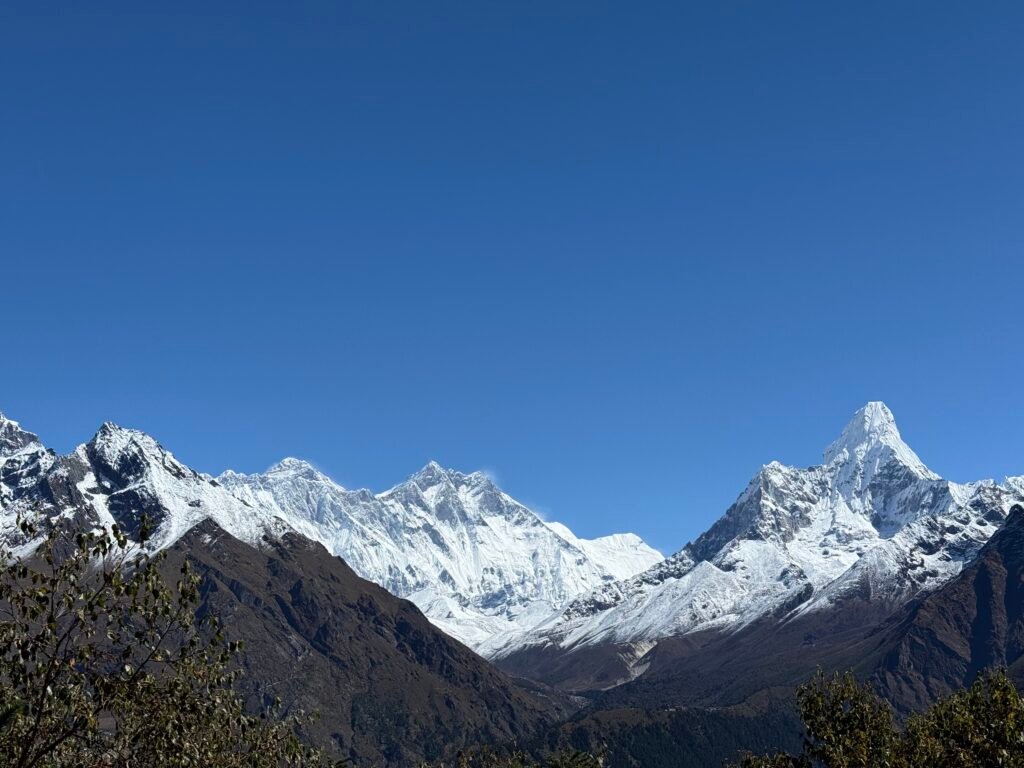
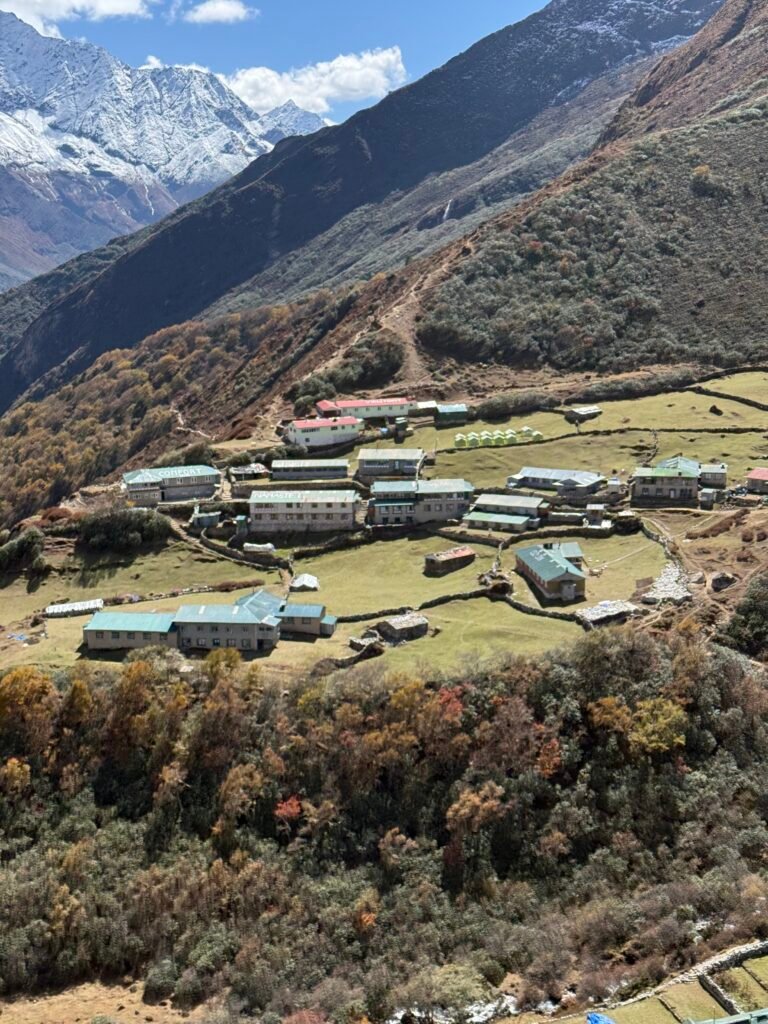
Over 12 days, we walk from the green hills of the Khumbu to the glacier at the foot of the world’s highest peak. Along the way there are teahouses with wood-burning stoves, prayer flags snapping in the wind, and the kind of silence that makes you hear your own heartbeat. I’ve led this trek more times than I can count, and it never gets old.
Quick Facts
| Duration | 12 days |
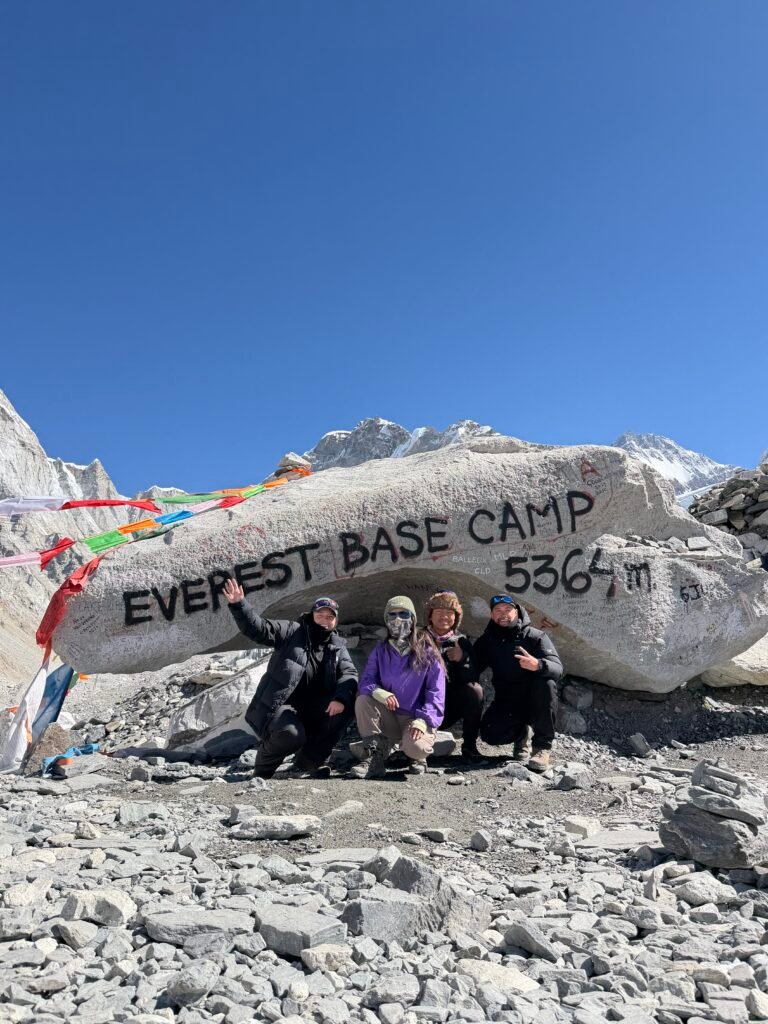
| Max Altitude | 5,364m / 17,598ft (Kala Patthar) |
| Difficulty | Moderate-to-hard — no technical climbing, but altitude is real |
| Best Season | March–May (spring) and October–November (autumn) |
| Starting Point | Lukla (flight from Kathmandu) |
| Accommodation | Teahouses throughout |
What Makes This Trek Special
The Everest Base Camp trek isn’t just about the destination — it’s about the days in between. The morning you round a corner and see Ama Dablam for the first time. The bowl of dal bhat that tastes like the best thing you’ve ever eaten after a long day of walking. The way the stone walls of Tengboche Monastery glow gold in the afternoon light.
This is the classic route, done the way we’ve refined it over years of guiding. We’ve built in proper acclimatization, chosen the best teahouses, and kept the pace humane. You’ll walk with a local guide who knows every trail, every shortcut, and every family who runs the lodges along the way.
The Day-by-Day Itinerary
Here’s the exact schedule we use on the ground. It’s paced for real people — not racing, not loitering, just walking at the rhythm of the mountains:
| Day | Route |
|---|---|
| Day 1 | Kathmandu → Lukla → Phakding |
| Day 2 | Phakding → Namche Bazaar |
| Day 3 | Acclimatization in Namche Bazaar |
| Day 4 | Namche Bazaar → Tengboche |
| Day 5 | Tengboche → Dingboche |
| Day 6 | Acclimatization in Dingboche |
| Day 7 | Dingboche → Lobuche |
| Day 8 | Lobuche → Gorakshep → Everest Base Camp |
| Day 9 | Pheriche → Namche Bazaar |
| Day 10 | Namche Bazaar → Lukla |
| Day 11 | Lukla → Kathmandu |
| Day 12 | Kathmandu → Departure |
Before You Go: What You Need to Know
Best Season
Spring (March–May) brings rhododendrons in bloom and stable weather. Autumn (October–November) has the clearest skies and postcard-perfect sunrises from Kala Patthar. Winter (December–February) is quieter but cold — expect snow on the pass. Monsoon (June–September) means clouds and leeches lower down, though the upper trail stays passable.
Difficulty & Fitness
You don’t need to be an athlete, but you do need patience with your own lungs. The hardest part isn’t one big climb — it’s the repeated up-and-down and the altitude. We walk 5–7 hours most days, with two built-in acclimatization days so your body can keep up. If you can hike for a few hours at home with a daypack, you’re ready.
Permits
You’ll need a Khumbu Pasang Lhamu Rural Municipality permit and a Sagarmatha National Park entry permit. A licensed guide is mandatory in this region. We handle all permits for you — you just show up with your passport.
Accommodation & Food
Owner-run teahouses the whole way — simple twin rooms, shared toilets, and a heated dining room where you’ll trade stories with other trekkers over a wood stove. The food is surprisingly good: dal bhat (unlimited refills), momos, noodles, pancakes, and the occasional apple pie in Namche. Our advice: eat carbs, drink 3+ litres of water, and sleep.
Safety
We’ve built two acclimatization days into the itinerary (Namche and Dingboche) for a reason. Our guides are trained in altitude sickness recognition and carry a pulse oximeter. If symptoms worsen, we descend — fast. Your safety is the plan, not an afterthought.
Life on the Trail with 8 Mountains
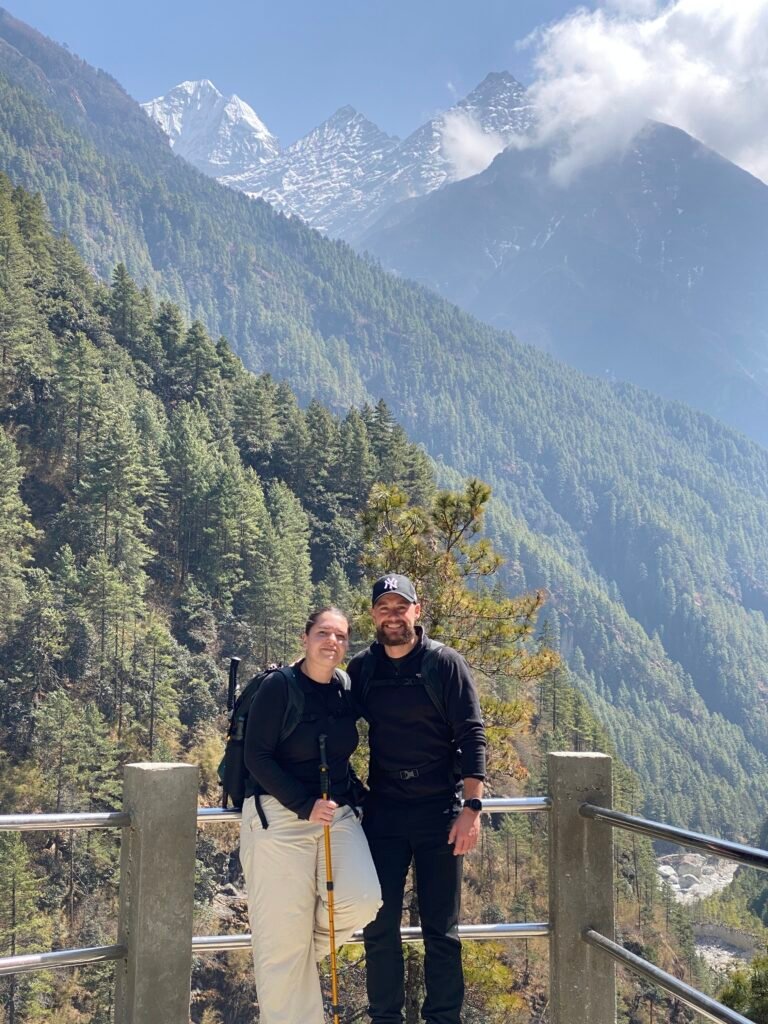
We keep groups small — usually 4–8 people — and our own guides lead every trek. No outsourced groups, no assembly-line experience. You’ll walk at your own pace, eat well, and actually get to know the villages you pass through. That’s the difference between a tick-list trek and one you’ll remember for the rest of your life.
Grab the Full Itinerary (PDF)
Want the complete day-by-day with distances, overnight stops, and packing recommendations for each section? Download our field itinerary, free:
Free download · the exact route we run on the ground
What to Pack
We’ve sent hundreds of trekkers out with this list. It covers the essentials for any of our teahouse treks — adjust for season and altitude.
Clothing
- Base Layer: 2–3 quick-dry t-shirts, 1 thermal set
- Mid Layer: Fleece or down jacket
- Outer Layer: Waterproof jacket & trousers, raincoat or poncho
- Lower Body: 2–3 trekking pants, thermal leggings, 2–3 pairs trekking socks
- Footwear: Trekking boots (broken in), sandals for evenings
- Crampons — provided by 8 Mountains
Headgear & Gloves
- Warm beanie or sun hat
- Sunglasses, buff/scarf
- Gloves (lightweight + warm pair)
Backpack & Gear
- 40–55L backpack
- Trekking poles — provided by 8 Mountains
- Sleeping bag (rated to -10°C)
Essentials
- 1L water bottles + purification tablets or filter
- Sunscreen (SPF 50+), lip balm with SPF
- Personal medicine — bring enough for the full trek plus a few extra days
- Toiletries (toothbrush, wet wipes, menstrual care products, quick-dry towel)
- Power bank (charging available at teahouses for a small fee)
- Snacks (energy bars, nuts, dried fruits)
Frequently Asked Questions
How hard is the Everest Base Camp trek, really?
Tough but doable. No technical climbing — you won’t need ropes or ice axes. The challenge is sustained altitude and the daily ups and downs. Most reasonably fit people manage it with the acclimatization days we build in. We’ve had clients in their 60s complete it comfortably.
Do I need a guide and permit?
Yes. A licensed guide is mandatory in the Khumbu region, and you need both the Khumbu Pasang Lhamu permit and Sagarmatha National Park entry. We arrange everything before you land — just bring your passport.
When is the best time to go?
March–May and October–November offer the most stable weather and clearest views. Spring has rhododendrons and warmer temperatures; autumn has the sharpest mountain air and postcard sunrises.
How do you handle altitude sickness?
Slow and steady, with acclimatization days at Namche and Dingboche. We carry a pulse oximeter on every trek and monitor everyone’s oxygen levels. Our guides are trained to spot early AMS symptoms, and we descend immediately if anyone shows serious signs. No summit is worth your health.
Can I charge my phone on the trail?
Yes — most teahouses have solar panels and charging points. There’s usually a small fee (around $2–3 per device). We recommend bringing a power bank as backup.
Ready to walk this trail?
Small groups, local women-led guides, and itineraries built from years on the ground. Message Vivi and we’ll plan it with you.
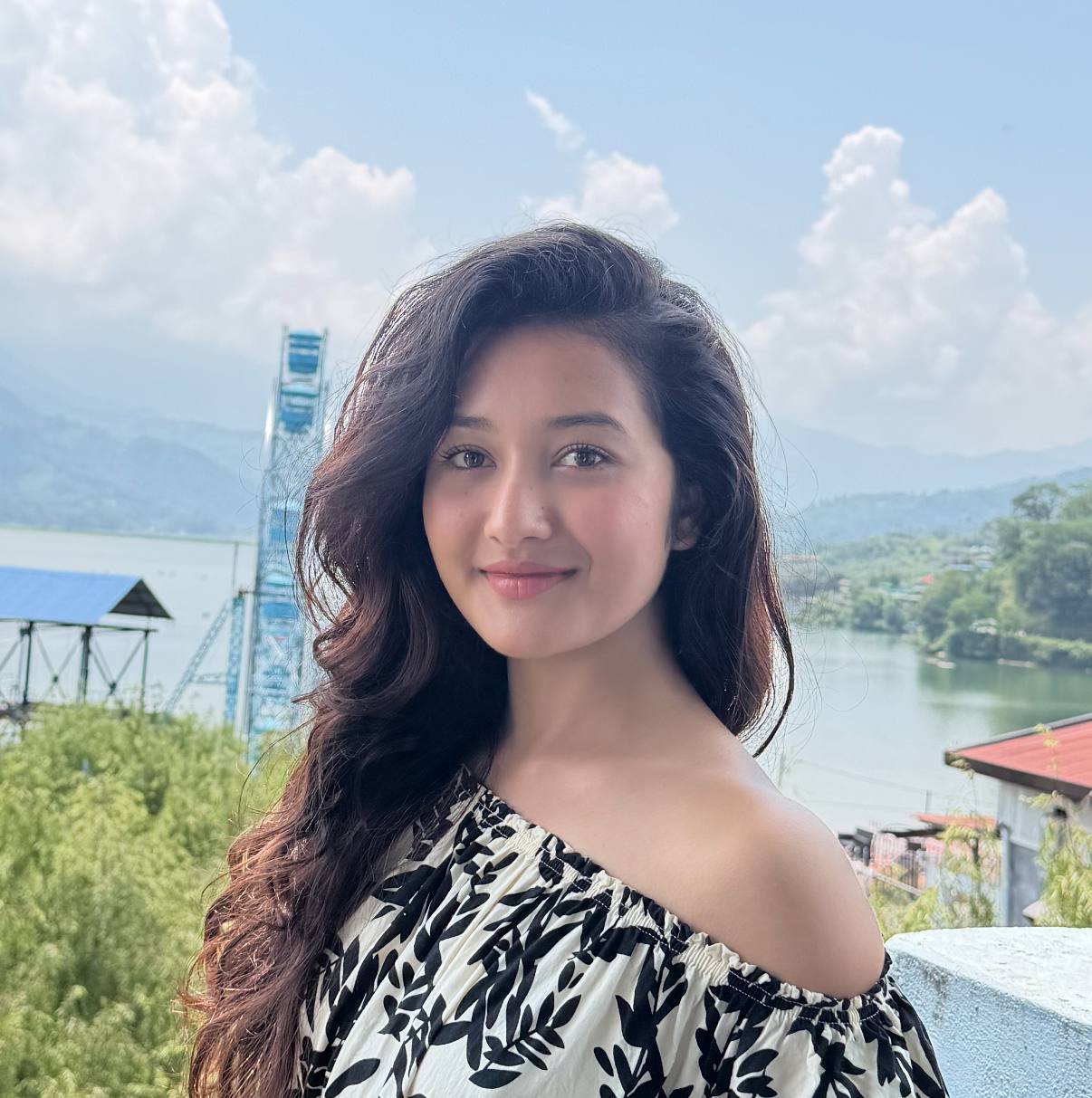
Author: Vivi
Co-founder and lead guide at 8 Mountains. I’ve been guiding treks in Nepal for over a decade, and I still get butterflies every time I step onto the trail.