
If Everest Base Camp is a marathon, the Annapurna Sanctuary is a perfectly paced half — same punch-your-breath-out views, half the time off work. In eight days you go from lakeside Pokhara to standing inside a natural amphitheatre of 8,000-metre peaks, surrounded by walls of ice and granite that feel close enough to touch.
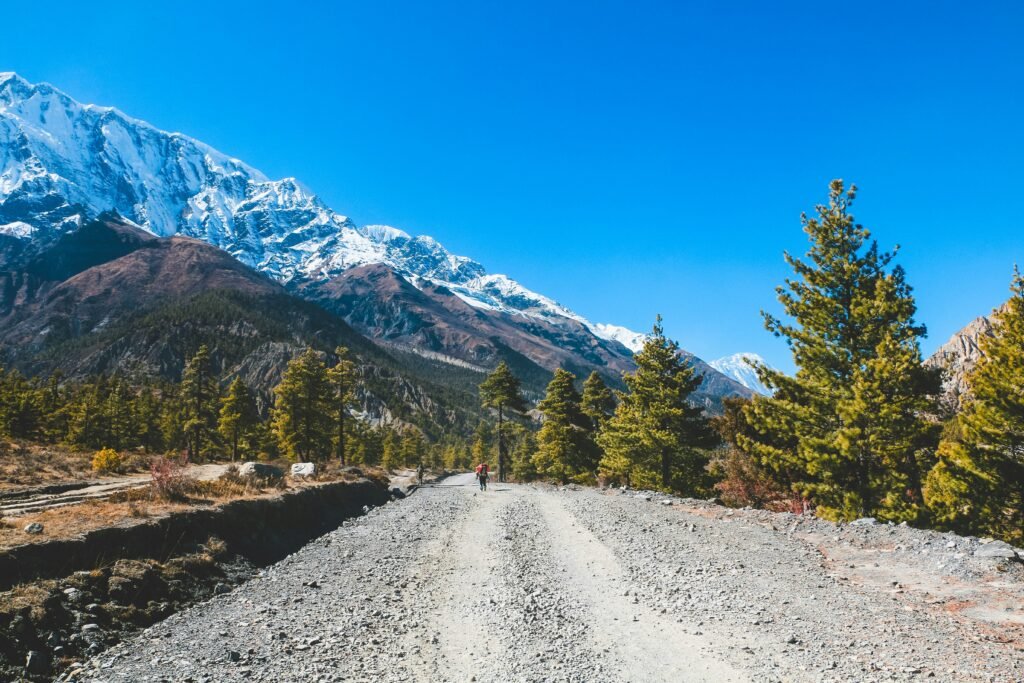
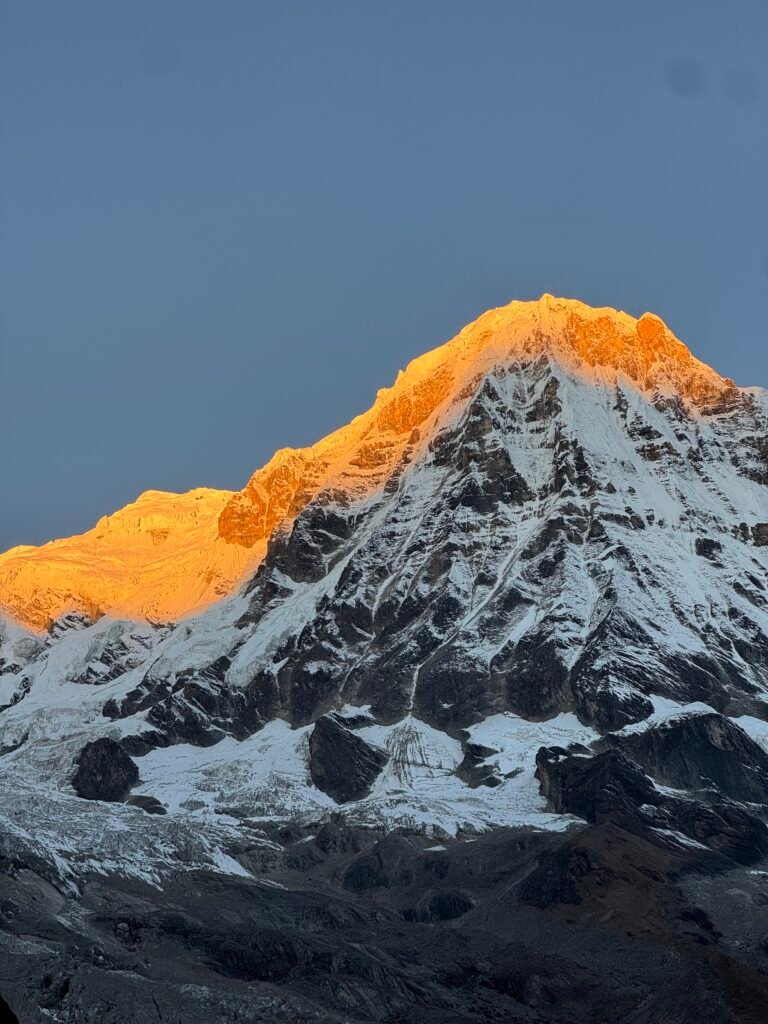
I’ve guided this trek more times than I can count, and it still catches me off guard. The way the trail narrows through bamboo forests, then opens into the Sanctuary like a curtain rising. The steam rising from Jhinu’s natural hot springs after days on the trail. The moment you step into ABC and realise you’re surrounded by a ring of giants — Annapurna I, Machhapuchhre, Hiunchuli — all looking down at you.
Quick Facts
| Duration | 8 days |
| Max Altitude | 4,130m / 13,550ft (Annapurna Base Camp) |
| Difficulty | Moderate — approachable for most fitness levels |
| Best Season | March–May and October–November |
| Starting Point | Pokhara (drive to Ghandruk) |
| Accommodation | Teahouses throughout, including at ABC |
Why the Sanctuary?
The Annapurna Base Camp trek is one of the most accessible big-mountain experiences in Nepal. You sleep in a teahouse every night — no tents, no freeze-dried meals. The trail climbs through rhododendron forests, past Gurung villages, and into a high glacial basin that feels like a lost world. And the best part? You can do it in just over a week.
It’s the trek I recommend to friends who say they want to “try Nepal trekking.” It’s short enough to fit into a holiday, scenic enough to rival any longer route, and the hot springs at Jhinu on the way down are a reward you’ll talk about for years.
The Day-by-Day Itinerary
| Day | Route |
|---|---|
| Day 1 | Pokhara → Ghandruk |
| Day 2 | Ghandruk → Chhomrong |
| Day 3 | Chhomrong → Bamboo |
| Day 4 | Bamboo → Deurali |
| Day 5 | Deurali → Annapurna Base Camp |
| Day 6 | ABC → Bamboo |
| Day 7 | Bamboo → Jhinu Danda (Hot Springs) |
| Day 8 | Jhinu Danda → Nayapul → Pokhara |
Before You Go
Best Season
March–May and October–November are the sweet spots. Spring brings blooming rhododendrons and warmer temperatures; autumn offers the clearest mountain views. The Sanctuary is dramatic in any season, but these months give you the most reliable weather.
Difficulty & Fitness
This is one of the most approachable big-mountain treks in Nepal. The trail is well-maintained, there are teahouses the whole way, and there’s no technical climbing. The longest day is about 6–7 hours. You can even bail out to a jeep road if your legs give out. Most people with a reasonable fitness level handle this comfortably.
Permits
You’ll need an Annapurna Conservation Area Permit (ACAP). A guide is recommended, especially for the upper Sanctuary section where the trail can be less defined in bad weather. We handle all permits for you.
Accommodation & Food
Teahouses from Ghandruk all the way to ABC itself — the highest lodges sit right at the base of the peaks. You’ll eat dal bhat, momos, noodles, and discover that Ghandruk makes some of the best apple pie in Nepal. The hot springs at Jhinu on Day 7 are the perfect way to end the trek.
Life on the Trail
We keep groups small and our own guides lead every trek — no outsourced groups. You’ll walk at your own pace, eat well, and actually get to know the villages you pass through. That’s the difference between a tick-list trek and one you’ll remember.
Grab the Full Itinerary (PDF)
Want the complete day-by-day with distances, overnight stops, and packing recommendations? Download our field itinerary, free:
Free download · the exact route we run on the ground
What to Pack
We’ve sent hundreds of trekkers out with this list. It covers the essentials for any of our teahouse treks — adjust for season and altitude.
Clothing
- Base Layer: 2–3 quick-dry t-shirts, 1 thermal set
- Mid Layer: Fleece or down jacket
- Outer Layer: Waterproof jacket & trousers, raincoat or poncho
- Lower Body: 2–3 trekking pants, thermal leggings, 2–3 pairs trekking socks
- Footwear: Trekking boots (broken in), sandals for evenings
- Crampons — provided by 8 Mountains
Headgear & Gloves
- Warm beanie or sun hat
- Sunglasses, buff/scarf
- Gloves
Backpack & Gear
- 40–55L backpack
- Trekking poles — provided by 8 Mountains
- Sleeping bag (rated to -5°C)
Essentials
- 1L water bottles + purification tablets or filter
- Sunscreen (SPF 50+), lip balm
- Personal medicine — bring enough for the full trek plus a few extra days
- Toiletries (toothbrush, wet wipes, menstrual care products, quick-dry towel)
- Power bank
- Swimwear for the Jhinu hot springs!
- Snacks (energy bars, nuts, dried fruits)
Frequently Asked Questions
Is ABC good for beginners?
Yes — it’s one of the most approachable big-mountain treks in Nepal. Teahouses the whole way, no technical climbing, and a jeep-road bail-out option if you need it. Most beginners handle it well with basic fitness.
How cold does it get at Annapurna Base Camp?
Nights at ABC (4,130m) drop below freezing, especially in winter. Days are often sunny and warm inside the Sanctuary. A decent sleeping bag rated to -5°C or -10°C handles it fine.
Can I do ABC in fewer than 8 days?
You can, but we don’t recommend it — you’d have to skip the Jhinu hot springs and rush through the Sanctuary. Eight days keeps it fun, not frantic. The hot springs on Day 7 are genuinely one of the best parts of the trek.
Do I need a guide for ABC?
Not strictly required by law, but highly recommended for the upper Sanctuary section. The trail can be hard to follow in cloud or snow, and a guide adds so much to your understanding of the local culture and environment.
Ready to walk this trail?
Small groups, local women-led guides, and itineraries built from years on the ground. Message Vivi and we’ll plan it with you.

Author: Vivi
Co-founder and lead guide at 8 Mountains. The Annapurna region is my home playground — I know every trail, every teahouse family, and every hidden viewpoint.