
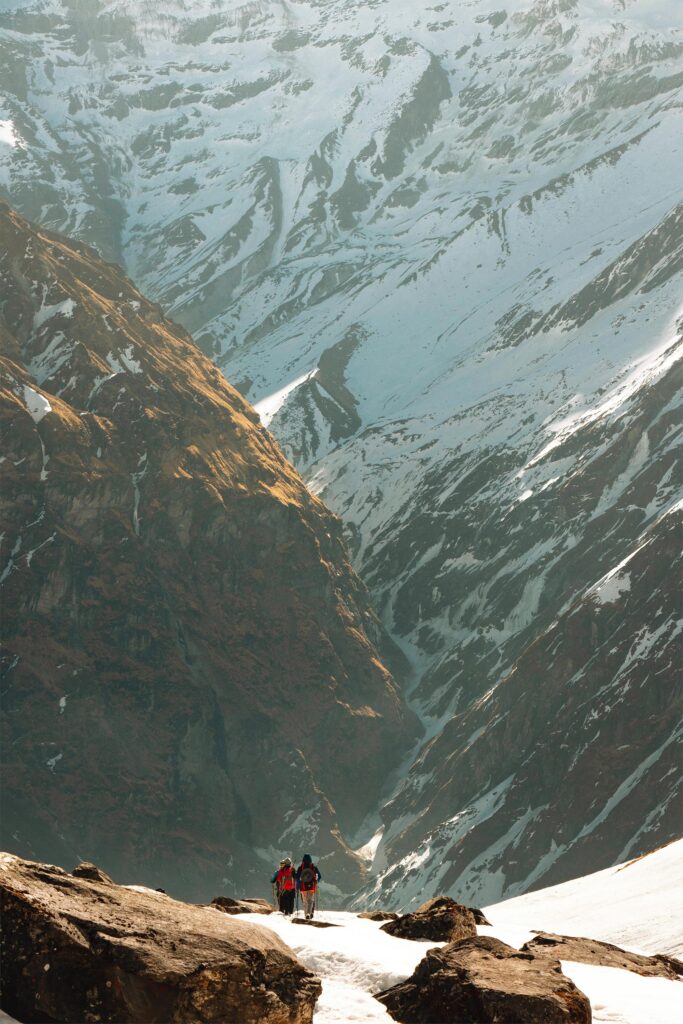
The Annapurna Circuit Trek is widely recognized as one of the best trekking trails in the world, offering breathtaking scenery, diverse landscapes, and an unforgettable cultural experience. Located in the northwestern Himalayas of Nepal, this trek circles the majestic Annapurna Massif, showcasing iconic Himalayan peaks like Mt. Manaslu (8,187 m), Mt. Annapurna, Mt. Dhaulagiri, Mt. Hiunchuli, Mt. Gangapurna, and many more. In this blog post, we provide a complete guide to help you plan this adventure of a lifetime.
Why Choose the Annapurna Circuit Trek?
- Unparalleled Scenery: Witness panoramic views of some of the world’s highest mountains.
- Diverse Landscapes: From lush subtropical valleys to arid Tibetan plateaus, the trek offers an extraordinary variety of terrains.
- Cultural Immersion: Experience the vibrant local culture of Brahmin, Chhetri, and Tibetan-influenced Buddhist communities.
- Unique Highlights: Cross Thorong La Pass (5,416 m), the highest mountain pass in the world, and visit the sacred Muktinath Temple, revered by Hindus and Buddhists alike.
Annapurna Circuit Route Overview
The trek begins at Besisahar, less than 1,000 meters above sea level, and ascends to the Thorong La Pass at 5,416 meters before descending through the Kali Gandaki Gorge, the deepest gorge in the world. The route traverses four regions: Lamjung, Manang, Mustang, and Myagdi, each offering unique cultural and geographical experiences.
Key Highlights of the Trek
- Stunning views of Mt. Annapurna I-IV, Mt. Dhaulagiri, Mt. Gangapurna, and other peaks.
- Thorong La Pass (5,416 m), a dream for trekkers.
- Visit to the ancient Braga Monastery and the holy Muktinath Temple.
- Side trip to the serene Gangapurna Lake and Glacier.
- Exploration of Tibetan-style villages in Manang and Mustang.
- Sunrise views from Poon Hill, offering vistas of Annapurna South and Machhapuchhre (Fishtail Mountain).
Annapurna Circuit Trek Itineraries
18-Day Annapurna Circuit Trek (Including Poon Hill)
Day 1: Arrival in Kathmandu. Transfer to hotel. Overnight in Kathmandu.
Day 2: Drive to Bhulbhule (7-8 hours). Overnight at Tea House.
Day 3: Trek to Jagat (1,300 m). Walking: 6.5 hours.
Day 4: Trek to Dharapani (1,860 m). Walking: 5 hours.
Day 5: Trek to Chame (2,725 m). Walking: 6 hours.
Day 6: Trek to Pisang (3,190 m). Walking: 5 hours.
Day 7: Trek to Manang (3,500 m). Walking: 5 hours.
Day 8: Acclimatization day in Manang. Explore Braga Monastery and Gangapurna Lake.
Day 9: Trek to Yak Kharka (4,090 m). Walking: 4 hours.
Day 10: Trek to Thorong Phedi (4,441 m). Walking: 3-4 hours.
Day 11: Cross Thorong La Pass (5,416 m) and descend to Muktinath. Walking: 8-9 hours.
Day 12: Trek to Marpha (2,670 m). Walking: 7 hours.
Day 13: Trek to Kalopani (2,530 m). Walking: 7 hours.
Day 14: Trek to Tatopani (1,110 m). Walking: 7 hours.
Day 15: Trek to Ghorepani (2,834 m). Walking: 7 hours.
Day 16: Hike to Poon Hill and trek to Nayapul. Drive to Pokhara (1.5 hours). Overnight in Pokhara.
Day 17: Drive back to Kathmandu (7-8 hours). Evening farewell dinner with cultural show.
Day 18: Departure. Transfer to Kathmandu International Airport.
🗺️ 11-Day Annapurna Circuit Trek Itinerary
(Starting from Kathmandu or Pokhara)
Trek Grade: Moderate to Challenging
Max Altitude: 5,416m (Thorong La Pass)
Best Season: March–May & September–November
Day 1 – Drive to Besisahar (760m)
Early morning departure from Kathmandu (or Pokhara), driving through terraced hillsides, small market towns, and lush river valleys to reach Besisahar, the official gateway to the Annapurna Circuit.
Overnight in Besisahar.
Day 2 – Drive/Jeep to Chame (2,670m)
After breakfast, continue by local jeep or private vehicle along a rugged mountain road beside the Marsyangdi River. The landscapes shift from subtropical greenery to alpine pine forests. Arrive at Chame, the administrative center of Manang District.
Overnight in Chame.
Day 3 – Trek from Chame to Pisang (3,200m) – 5–6 hrs
The trail ascends gradually through forests of oak and fir, with stunning views of Lamjung Himal and Annapurna II. Cross several suspension bridges and reach Pisang, a charming village overlooking the valley.
Overnight in Pisang.
Day 4 – Trek from Pisang to Manang (3,540m) – 6–7 hrs
A day of dramatic scenery as the valley opens wide. You can choose between the lower trail through Humde or the higher trail via Ghyaru and Ngawal, offering panoramic mountain views. Arrive in Manang, a picturesque Himalayan settlement surrounded by peaks.
Overnight in Manang.
Day 5 – Acclimatization Day in Manang
Spend the day exploring Manang village, visiting the Bhojo Gompa or hiking up to Gangapurna Lake for breathtaking views. Acclimatization is crucial here before ascending further. Try local yak cheese or apple pie from Manang’s famous bakeries.
Overnight in Manang.
Day 6 – Trek from Manang to Yak Kharka (4,050m) – 4–5 hrs
A shorter, gradual ascent today, leaving behind the forest zone and entering open alpine terrain. Pass through Gunsang village before reaching Yak Kharka, a small settlement with magnificent views of Gangapurna and Tilicho Peak.
Overnight in Yak Kharka.
Day 7 – Trek from Yak Kharka to Thorong Phedi (4,450m) – 4–5 hrs
A steady uphill walk leads to Thorong Phedi, the base camp for the high pass. The air gets thinner, and the pace slower. Optional short acclimatization hike in the afternoon.
Overnight in Thorong Phedi (or High Camp).
Day 8 – Cross Thorong La Pass (5,416m) – Trek to Muktinath (3,800m) – 8–9 hrs
A long, challenging but unforgettable day. Start before dawn to cross the mighty Thorong La Pass, the highest point of the trek. Prayer flags flutter as the sun rises over a horizon of endless peaks. Descend carefully to Muktinath, a sacred pilgrimage site for both Hindus and Buddhists.
Overnight in Muktinath.
Day 9 – Visit Muktinath Temple, Drive/Trek to Marfa (2,670m)
Early morning visit to the Muktinath Temple, a serene site with 108 holy water spouts and eternal flame. After breakfast, descend by jeep or trek via Jomsom to reach Marfa, the “apple capital” of Nepal, known for its stone houses and apple brandy.
Overnight in Marfa.
Day 10 – Drive to Tatopani (1,200m) – Natural Hot Springs
Follow the Kali Gandaki gorge by local jeep, descending through dramatic landscapes. Arrive at Tatopani, where you can unwind in natural hot springs — a well-earned treat after the high passes.
Overnight in Tatopani.
Day 11 – Drive to Pokhara (827m)
Enjoy a scenic drive back to Pokhara, with views of terraced hillsides and glimpses of the snow peaks you just conquered. Check in at your hotel and celebrate your journey beside Phewa Lake.
Overnight in Pokhara.
Cost Inclusions and Exclusions
Included Services:
- Airport transfers by car/van.
- 2 nights in a tourist-standard hotel in Kathmandu and 1 night in Pokhara.
- Tea house/mountain lodge accommodation during the trek.
- Meals during the trek (breakfast, lunch, and dinner).
- Experienced trekking guide and porter (Gold Package only).
- TIMS and ACAP trekking permits.
- First aid kit and trekking map.
- Farewell dinner with cultural show in Kathmandu.
Excluded Services:
- International airfare.
- Nepal visa fee.
- Travel insurance covering high-altitude evacuation.
- Personal expenses (laundry, phone calls, bottled water, etc.).
- Meals in Kathmandu and Pokhara (except breakfast and farewell dinner).
- Emergency evacuation costs.
- Tips for staff.
- Extra services not mentioned in the package.
Approximate Cost
The approximate cost for the Annapurna Circuit Trek can range from $800 to $2,500 USD per person, depending on the level of comfort and services you choose. Here’s a breakdown:
- Budget Trek: $700–$800 (self-guided, basic accommodation, and meals).
- Standard Guided Trek: $9,00–$1,500 (guide, porter, mid-range accommodation, meals, and permits).
- Luxury Trek: $18,00–$2,500 (experienced guides, premium accommodations, private transportation, and added comforts).
- These costs include trekking permits (TIMS and ACAP), food, accommodation, and transport but exclude personal expenses like gear, travel insurance, and tips.
Note: Prices are based on a minimum of two trekkers. Solo trekker rates are available upon request.
Why Choose 8 Mountains for Your Trek?
- Women-Led Local Business: We are a young, women-led company passionate about sustainable tourism and empowering our community.
- Sustainability Focus: We strictly follow the Leave No Trace principles to preserve the pristine beauty of the Himalayas.
- Experienced Local Guides: Our team comprises expert guides and Sherpas who bring deep knowledge of the region.
- Fair Pricing: As a direct operator, we offer competitive pricing without hidden fees.
- Safety First: Your safety is our priority, and we provide all necessary safety measures and emergency support.
- Cultural Immersion: We offer personalized experiences that go beyond trekking, letting you connect with local traditions and communities.
Best Time for Annapurna Circuit Trek
- Autumn (September-November): Clear skies, moderate temperatures, and stunning views.
- Spring (March-May): Blooming rhododendrons and pleasant weather.
- Winter (December-February): Quiet trails but harsh cold.
- Monsoon (June-August): Rainy and slippery but lush vegetation for nature lovers.
Contact Us
For inquiries or bookings, reach out to us:
- Email: 8mountains.info@trek.com
- WhatsApp/Viber: +977 9803611387
Embark on an unforgettable adventure with 8 Mountains, where your journey is crafted with passion, sustainability, and care. Book a FREE Exploration Call today to learn everything you need to know about the breathtaking Annapurna Circuit Trek. Let us guide you through the journey step by step!
\n\n